
Buying BBQ Seasoning: What to Look for in Grill Spices, Rubs and Marinades
A good BBQ seasoning should flavour meat, vegetables or seafood without becoming unusable after opening or hiding allergens. However, there are clear differences between a dry rub, a classic barbecue seasoning blend and a liquid grill marinade.
Typical buying mistakes come down to three points:
- Heat levels aren’t clearly stated: Terms like “spicy” or “hot” don’t tell you much about the actual composition. The proportion of chilli and the other ingredients are far more revealing.
- Sugar and salt are underestimated: A seasoning blend can contain significant amounts of salt or sugar per 100 grams. This matters especially if you season generously or marinate in multiple stages.
- Allergens aren’t always in the product name: Sesame, soya, peanuts, celery, mustard and gluten-containing cereals can all appear in BBQ seasoning blends or marinades. Always check the ingredient and allergen labelling before buying.
These parameters you should check before buying
1. Powder, rub or liquid marinade?
A dry grill seasoning is ideal for sprinkling, rubbing in and, in some cases, using as a dip. A meat rub usually sticks better if the food is lightly brushed with oil first. Powders are also handy for vegetables, tofu, prawns or dishes cooked in an air fryer.
A liquid meat marinade spreads evenly and is practical for larger cuts of meat or longer marinating times. However, its use may be limited to certain types of meat. For example, the O'Food Korean BBQ Galbi Marinade is intended for beef, while the Beksul Korean BBQ Marinade is specifically marketed for pork.
2. Ingredients, heat and flavour profile
Pay attention to the order of ingredients. This shows which components are listed first by quantity. In Liu Po Barbecue Seasoning 3 in 1, chilli makes up 32% and cumin 25%. This blend is therefore interesting for buyers looking for a distinctly seasoned, moderately spicy profile with a cumin aroma.
For a Chinese BBQ seasoning, cumin, chilli, Sichuan pepper, sesame or peanut are typical. A Korean BBQ marinade, on the other hand, often works with soya sauce, garlic, fruit purée and sugar. If you’re after a spicy grill seasoning, don’t just rely on the product name – look at the types of chilli and their quantity.
3. Allergens, nutritional values and pack size
If you have allergies or intolerances, the allergen labelling is crucial. The Huaseed BBQ Seasoning Original Flavor 35 g contains sesame according to the product information. The CUIHONG Seasoning Powder lists sesame, soya and peanuts as allergens. The O'Food Galbi Marinade contains soya and wheat. Always cross-check these details against the label on the packaging you receive.
Pack size also affects practical use:
- 30 to 50 g: suitable for trying out or for occasional barbecues
- 100 to 200 g: ideal for regular seasoning and multiple cooking methods
- 280 to 500 g: perfect for households that marinate often or prepare larger quantities of barbecue food
Liquid products usually need to be refrigerated after opening. Dry blends, on the other hand, should be stored in a cool, dry, dark place, tightly sealed.
Our selection by usage profile
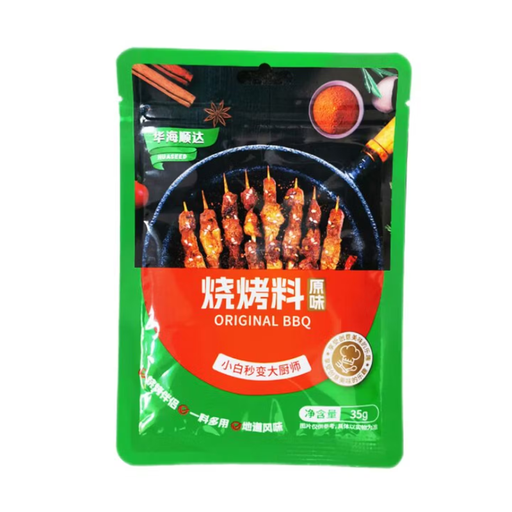
Huaseed BBQ Seasoning Original Flavor 35 g
Why this product fits the profile: The small pack is ideal for a first try with Chinese-inspired BBQ flavour and can be sprinkled straight onto meat or vegetables.
The ingredient list includes whole cumin seeds, chilli, salt, monosodium glutamate and Sichuan pepper. Sesame is listed as an allergen.
35 g pack; suitable for sprinkling, marinating and stir-fries; store dry.
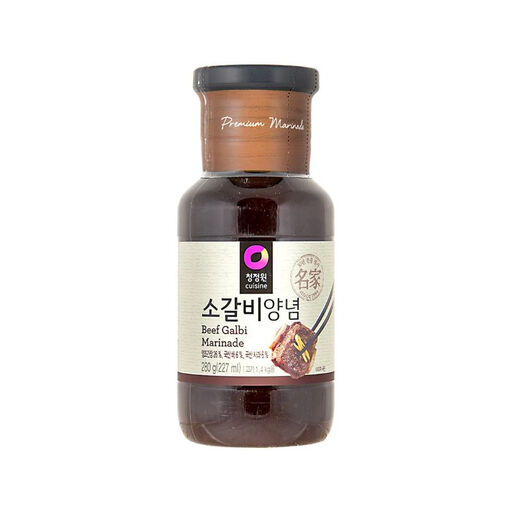
O'Food Korean BBQ Galbi Marinade for Beef 280 g
Why this product fits the profile: This ready-to-use Korean marinade is tailored to beef and saves you from measuring out several ingredients separately.
The recommended quantity is clearly stated: 90 g of marinade for 450 g of meat. This makes dosing easier to control.
280 g bottle; soya sauce, garlic and apple purée in the ingredient list; contains wheat and soya.
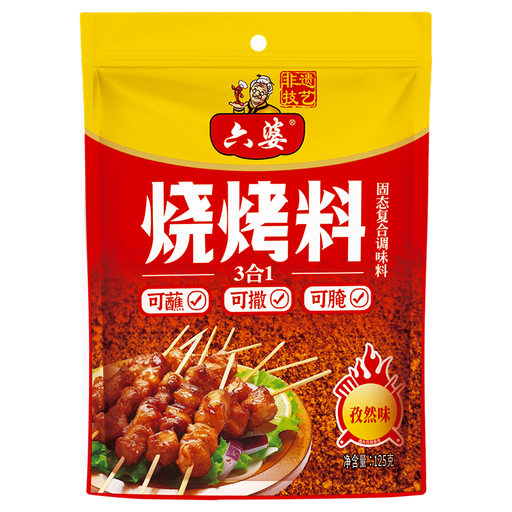
Liu Po Barbecue Seasoning 3 in 1 125 g
Why this product fits the profile: This blend can be used for marinating, sprinkling and as a dry dip for grilled food, hotpot dishes and fried foods.
The packaging lists three specific uses and a marinating time of 20 to 30 minutes. The allergen information states no allergens.
125 g pack; chilli and cumin proportions are stated; suitable for meat, seafood and vegetables.
Looking for more options?
We’ve put together a full, regularly updated list of products that meet these strict selection criteria and the safety regulations in force in the EU.
Application tips for even results
- Dosing dry BBQ seasoning: Start with a small amount and season again after grilling. This is especially useful with salt-heavy blends.
- Making rub stick: Lightly brush meat or vegetables with oil, spread the seasoning evenly and leave to rest briefly. With very sugary rubs, control the heat so the surface doesn’t darken too quickly.
- Treat marinades separately: Do not use raw marinade that has been in contact with meat as a dip without cooking it first. Set aside a separate portion for dipping.
- Store correctly after opening: Keep powders airtight, dry and away from light. Refrigerate liquid marinades according to the instructions on the packaging.
FAQ about BBQ seasoning
Which BBQ seasoning works with vegetables and seafood?
Dry blends with cumin, chilli, pepper, garlic or onion are usually easy to dose flexibly. For seafood, a rub with lemon or pepper notes can be a good choice. Always check the specific ingredient list and possible allergens before use.
How long should meat be marinated with BBQ seasoning?
It depends on the product. For Liu Po Barbecue Seasoning 3 in 1, 20 to 30 minutes is recommended. Liquid marinades like Beksul can be used for at least 30 minutes or several hours, according to the product information. Always follow the instructions on the packaging.
How long does an opened grill seasoning last?
For dry blends, the best-before date on the packaging is key. After opening, keep them tightly sealed and stored dry. Liquid marinades often need to be refrigerated and used within the stated period. Changes in smell, colour, consistency or packaging indicate they should no longer be used.