
Battery-Operated Outdoor Christmas Lights: A Buyer’s Guide
As a Joybuy Product Recommendation Officer, I often see the excitement for a festively lit home or an atmospheric garden dampened by poor product choices. Battery-operated Christmas lights promise flexibility and easy installation, but the market is flooded with products whose real-world performance is disappointing. Before you invest, you should understand the typical pitfalls that lead to frustration and unnecessary expense.
The most common problems are quickly summarised:
- Misleading "Weatherproof" Claims: Many light sets advertised as "suitable for outdoor use" only have an IP20 rating. This merely protects against solid objects, not moisture. A single winter downpour is enough to permanently damage such lights.
- Poorly Designed Battery Compartments: A battery box that isn't watertight or is difficult to close is a critical point of failure. Moisture ingress leads to corrosion on the contacts and a complete failure of the lighting, often within just a few weeks.
- Deceptive Battery Life: The operating times stated by manufacturers are usually determined under ideal laboratory conditions. In cold temperatures, which are common during winter, battery performance drops significantly, which can drastically shorten the actual usage time.
To avoid these issues, it's crucial to focus on verifiable technical specifications rather than marketing promises.
What Really Matters When Making Your Choice
Durable and functional indoor & outdoor decorative lighting depends on a few, but decisive, parameters. Knowing them will protect you from a bad purchase.
1. The IP Rating: The Bare Minimum for Outdoor Use
The IP (Ingress Protection) rating is the most important indicator of a product's weather resistance. It consists of two digits.
- First Digit (Protection against solid objects): A "4" means protection against solid foreign objects with a diameter of 1.0 mm or more.
- Second Digit (Protection against water): This is where the crucial difference lies.
- IP44 (Protection against splashing water from all directions): This is the absolute minimum requirement for outdoor use. Products with this rating are suitable for sheltered areas like covered balconies, eaves, or wind-protected garden corners. They can withstand rain but should not be exposed to direct water jets (e.g., from a garden hose).
- IP20: Products with this rating offer no protection against water and are intended exclusively for indoor use, even if they are sometimes falsely advertised for outdoor use.
Therefore, always check the product description for an IP44 rating or higher. The battery compartment itself should also have at least this protection class and feature a rubber seal and a solid locking mechanism.
2. Smart Energy Management: Timer Function and Battery Type
Operating wireless ambient lighting means dealing with a limited energy source. Intelligent control is therefore not a luxury, but a necessity.
- Timer Function: An integrated timer, often on a 6-hours-on/18-hours-off cycle, is essential. It ensures the lights are only active when they can be seen, extending battery life by weeks. Without a timer, you would have to manually switch the lights on and off daily, which is impractical, especially in cold and wet conditions.
- Remote Control: A remote control significantly enhances convenience. It not only allows you to turn the lights on and off but often also to switch between different lighting modes (e.g., flashing, dimming, steady on) without having to open the battery compartment or touch the product.
- Battery Type: For outdoor use in the cold, use high-quality alkaline batteries. Cheap zinc-carbon batteries lose power quickly at low temperatures and are also more prone to leaking, which can damage the electronics.
3. Material Quality and Construction
The longevity of your garden decor lights or your illuminated Christmas window decorations is also determined by the material. Look for robust plastic (like polypropylene, PP) or metal for housings and ground stakes. Also, check the cable lengths: the distance between individual light elements and the length of the lead cable from the last light to the battery box are crucial for flexible and appealing placement.
Top Picks for Various Uses
Instead of making a blanket recommendation, we have identified products that meet specific needs and avoid the pitfalls mentioned earlier.
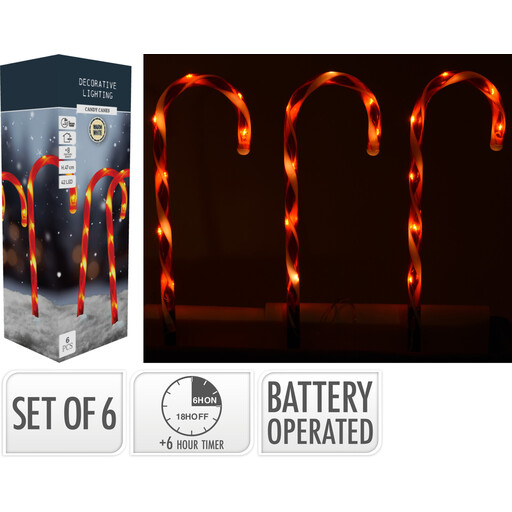
Set of 6 LED Candy Cane Lights
Why it's a great fit: Ideal for anyone who wants to quickly and easily decorate paths, flowerbeds, or the front garden. The ground stakes allow for stable and simple installation without any tools.
The IP44 rating ensures the lights can withstand splashing water. The included remote controls the 8 lighting modes and the timer function (6h on / 18h off), which efficiently manages battery consumption.
A complete set for instant, classic Christmas decoration in your outdoor space. The 1-meter spacing between the canes offers flexibility in your design.
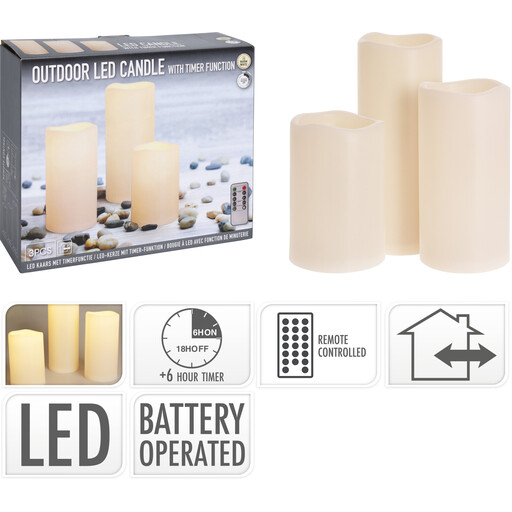
Set of 3 Battery-Operated LED Candles
Why it's a great fit: Perfect for creating a cosy and safe atmosphere on covered balconies, patios, or as window decor. The three different sizes allow for an attractive grouping.
The IP44 rating allows for use in sheltered outdoor areas. The remote control and the integrated timer function make daily use effortless and battery-efficient. There is no fire hazard as with real candles.
The realistic flickering effect of the LED candles with timer creates an authentic candlelight atmosphere. The batteries are included, allowing for immediate use.
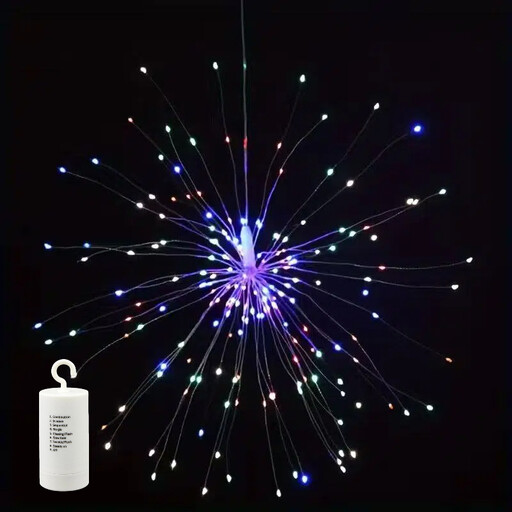
Hanging LED Starburst Firework Light
Why it's a great fit: For anyone looking for a unique focal point. The colourful firework design is excellent for hanging in trees, under eaves, or as a highlight on the balcony.
The IP44 rating ensures protection against splashing water in outdoor areas. The memory function saves the last selected of the 8 lighting modes, so the lamp restarts in the desired mode after automatically switching off.
The 90 colourful LEDs and 8 different light functions offer high visual dynamism and versatile design options for a festive atmosphere.
Looking for More Options?
We've curated a complete, up-to-date list of products that fully meet these strict selection criteria and safety standards.
Frequently Asked Questions (FAQ)
1. How long do batteries really last in outdoor Christmas lights? The actual runtime heavily depends on the outdoor temperature, the quality of the batteries, the number of LEDs, and the selected lighting mode. With continuous use in steady-on mode at temperatures around freezing, a set of high-quality alkaline batteries (e.g., 3x AA) for a typical battery-operated LED string light can last about 80 to 120 hours. By using a timer function (e.g., 6 hours per day), the usage period can be extended to two to three weeks or longer.
2. What exactly does an IP44 rating mean for outdoor use? IP44 means the product is protected against splashing water from all directions. It is therefore safe from rain or snow. However, it is not protected against strong water jets (like from a garden hose) or submersion. Therefore, it's best to place IP44-rated products in areas that are not constantly exposed to standing water. The battery compartment should always be positioned so that water can drain away easily and not collect inside.
3. Can I use rechargeable batteries for my battery-operated LED string lights? Yes, in most cases, this is possible. However, note that NiMH (Nickel-Metal Hydride) rechargeable batteries have a lower nominal voltage (1.2V) than alkaline batteries (1.5V). This may cause the lights to shine slightly less brightly. Additionally, rechargeable batteries discharge faster in the cold. For maximum brightness and longer runtime per cycle, especially at low temperatures, high-quality single-use alkaline batteries are often the more practical choice.