
Buy a bathroom shelving unit: How to find space-saving storage for every bathroom
A bathroom shelving unit should keep toiletries, towels and cleaning products neatly organised without making the room feel cramped. In small UK bathrooms in particular, just a few centimetres can make the difference between a practical solution and one that does not work. Before buying, it is therefore worth checking the dimensions, mounting method, material and load capacity rather than relying on design claims alone.
Common pitfalls when buying a bathroom shelving unit
1. “No drilling” is not reliable on every wall
A no-drill shower shelf with suction cups can be a good solution for smooth tiles, glass or metal. On grout lines, textured tiles, wallpaper, wood or uneven walls, however, suction mounting often does not hold securely over time. The stated load capacity also only applies under the specified mounting conditions.
Before buying, check the following:
- Is the wall surface smooth, clean and non-porous?
- Will the shelf be mounted in a corner or on a flat surface?
- Is the surface free from grout lines and significant unevenness?
- Does the shelf need to be repositioned regularly?
A shower shelf with hooks should not be used as a grab handle. For heavy bottles, securely screwing the shelf to a suitable wall is usually the more appropriate option.
2. Large external dimensions do not automatically mean lots of storage
A bathroom shelving unit may look spacious in photos, while its shelves only accommodate slim bottles in practice. The internal dimensions, number of tiers and distance between shelves are what matter. For a small bathroom, compact models with a vertical design are often more practical than wide units.
Measure the following before ordering:
- the available width, depth and height,
- the distance from doors, the shower and the washbasin,
- the height of the tallest shampoo or cleaning-product bottle,
- the clearance needed to open drawers and doors.
3. Moisture is often underestimated when it comes to materials and care
Bathrooms are exposed to steam, splashes and cleaning products. Metal, plastic, bamboo and wood-based materials therefore require different types of care. Open shelves with drainage holes allow water to run off more quickly. With a bathroom cabinet, the surface should be kept dry regularly so that as little moisture as possible collects around edges and fittings.
Look for specific information about:
- the material used for the frame, shelves and back panel,
- rust protection or coating on metal,
- water drainage on shower shelves,
- cleaning instructions,
- anti-tip protection for tall, freestanding units.
The most important selection criteria for a bathroom shelving unit
Choose a mounting method suited to your home
A bathroom wall shelf saves floor space, but requires a suitable wall and secure anchoring. Different wall plugs may be needed for plasterboard, concrete, brick or tiles. The fixings supplied are not automatically suitable for every type of wall.
Freestanding models can be positioned more flexibly. However, a tall bathroom cabinet with storage should stand securely on a level floor and, where provided, be secured to the wall using the anti-tip protection.
For the shower, there are three options:
- Suction-cup shelf: tool-free and removable, but dependent on the surface.
- Hanging shower shelf: for example, hung from a shower rail or shower head.
- Screw-fixed corner shelf: more stable under heavier loads, but requires permanent installation.
Dimensions, tiers and load capacity
The load capacity must suit the intended use. Shampoo, shower gel and toiletries should be distributed evenly. The stated maximum load must not be exceeded. With a shelving unit featuring several shelves, it is also important to check whether the load applies to each shelf or to the unit as a whole.
A space-saving bathroom shelf with a depth of 20 to 30 centimetres is often suitable for narrow alcoves. Towels or larger supplies, on the other hand, require more depth and a higher load capacity. A bathroom shelf with drawers protects smaller items from splashes and creates a visual distinction between frequently used and less frequently needed products.
Plan storage around the items you need to store
Cosmetics and dental-care products need small, easily accessible compartments. Towels benefit from wide, open shelves. For laundry, a shelf with laundry basket is practical if the basket can be removed or is easy to access. A towel rail with shelf combines two functions, but should not be positioned so close to the shower that textiles remain damp.
Our selection by user profile
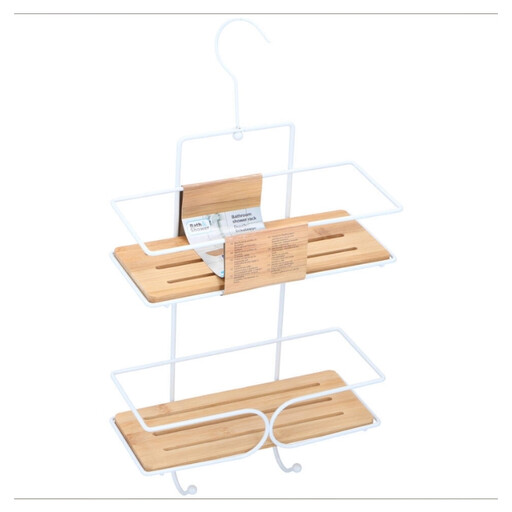
Bathroom Rack 2-Level W Hook
Why this product suits this profile: This compact model measures 25 × 10 × 47 cm and offers two tiers plus two hooks. It is designed for no-drill installation using suction cups and a hook.
Its shallow depth takes up very little space. Before installation, however, you should check whether the existing surface is suitable for suction cups.
Two shelf surfaces, two hooks and stated no-drill installation; metal frame with bamboo accents.
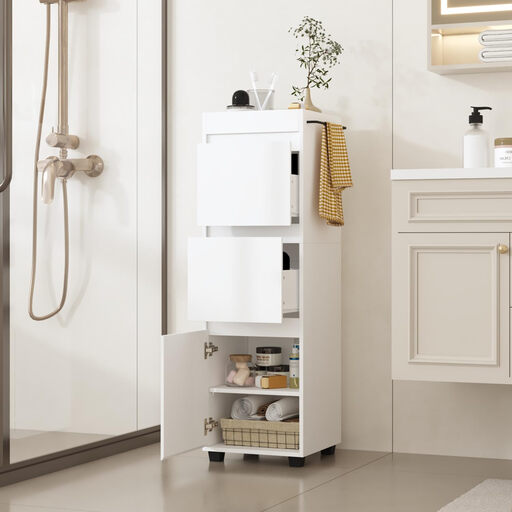
Caldion Bathroom Cabinet, White, with 2 Drawers
Why this product suits this profile: This freestanding bathroom cabinet measures 40 × 40 × 130 cm and features two drawers, a cupboard compartment and adjustable shelves.
The adjustable shelves help reduce unused gaps. The cabinet should stand on a level surface and be checked regularly for stability.
Two drawers, enclosed storage, adjustable shelf and a stated maximum load of 30 kg.
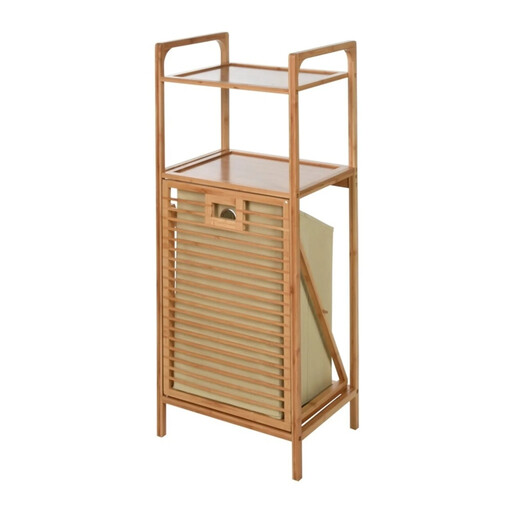
Bathroom Shelf 40 × 30 × 95 cm with Concealed Laundry Basket
Why this product suits this profile: Two shelves and an integrated laundry basket with a stated capacity of 42 litres combine laundry storage and bathroom organisation in a compact footprint.
The dimensions are clearly stated and the laundry basket is integrated into the unit. To ensure long-lasting use, avoid splashes and leaving textiles permanently wet.
Bamboo wood, two open shelves, concealed 42-litre laundry basket and foldable construction according to the product description.
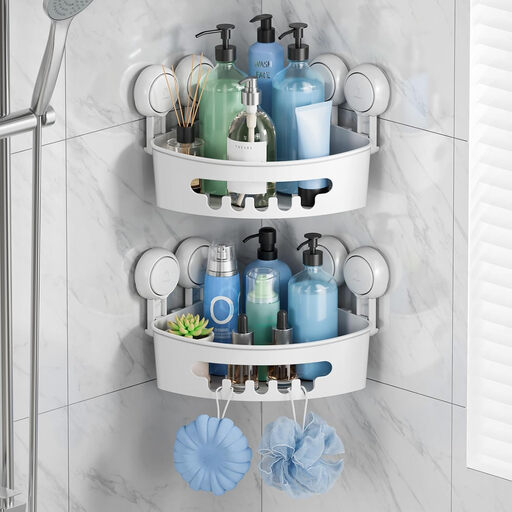
TAILI Suction Corner Shower Caddy, 2-Pack
Why this product suits this profile: This corner model makes use of a 90-degree corner and is fitted without screws, nails, adhesive or tools. It is designed for smooth, non-porous surfaces.
The product information clearly specifies suitable and unsuitable surfaces. The stated load capacity of 22 lb is approximately 10 kg and must not be exceeded.
Two baskets, removable construction and drainage holes; suitable for a 90-degree corner with a smooth surface.
Looking for more options?
We have put together a complete, regularly updated list of products that fully meet these strict selection criteria and the safety regulations applicable in the EU.
Care and safe use
To keep a bathroom shelving unit functional for the long term, remove any residual water regularly and clean the surfaces according to the manufacturer’s instructions. With a shower shelf, suction cups, hooks and drainage holes should also be checked. If a suction cup comes loose, unload the shelf first and refit it securely.
With tall units such as a bathroom cabinet, the anti-tip protection is particularly important. Drawers should not be overloaded. Heavy items belong in the lower compartments, while lighter cosmetics and accessories can be stored higher up.
Bathroom shelving unit FAQ
Which bathroom shelving unit is suitable for a small bathroom?
For small spaces, consider a slim freestanding shelf, a bathroom corner shelf or a wall-mounted model. Measure the available area and make sure doors and drawers can open fully. A vertical shelving unit makes use of the room’s height without taking up much floor space.
How can a no-drill shower shelf stay securely in place?
How long it lasts depends on the mounting method, surface, moisture and load. Suction cups should only be fitted to smooth, clean and non-porous surfaces. Grout lines, textured tiles, and matt or rough walls can affect adhesion. The stated load capacity must be observed.
What should you bear in mind with a wooden or bamboo bathroom shelf?
Wood and bamboo should not be left standing in water. Wipe away splashes promptly and ensure the area is well ventilated. For very wet shower areas, materials and designs with suitable drainage holes or corrosion-resistant components are more practical.