
How to Choose Your Bamboo Cutting Board
A high-quality cutting board is the cornerstone of any well-equipped kitchen. Models made from natural materials like bamboo or wood are especially popular, combining functionality with an appealing aesthetic. However, the selection is vast, and not every board lives up to its promises. Before you make a decision, it's helpful to understand some common weaknesses that often lead to problems after only a short period of use.
As your Joybuy Product Recommendation Officer, I'll help you distinguish important features from empty marketing promises. This way, you'll find a durable and practical board that truly fits your needs.
The 3 Most Common Pitfalls When Buying Wooden Cutting Boards:
- Unstable Construction: Many inexpensive boards are made from small pieces of wood or bamboo joined with adhesive. If the gluing is of poor quality or the material hasn't been dried sufficiently, the board can quickly warp, crack, or swell at the seams.
- Inadequate Surface Treatment: A board advertised as "pre-oiled" often has only a paper-thin protective layer that washes off after just a few rinses. The wood becomes susceptible to stains, absorbs moisture, and can turn into a breeding ground for germs.
- Incorrect Material Hardness: An extremely hard material can prematurely dull the blades of your knives. Conversely, wood that is too soft quickly develops deep cuts where food particles can get trapped, making it difficult to clean.
What Really Matters: The Decisive Criteria for Your Kitchen Board
To avoid a bad purchase, you should focus on objective and verifiable characteristics. The following three points are crucial for the quality and longevity of your new cutting board.
1. Material and Construction: Solid Wood, Bamboo, or Walnut?
The choice of material and the method of construction significantly determine a board's durability and knife-friendly properties.
- Bamboo: Technically a grass, bamboo is a rapidly renewable resource. It is naturally very dense and hard, making it resistant to deep cuts and moisture. Look for manufacturing processes like carbonisation (a heat treatment that increases stability) or a construction from continuous bamboo strips, which requires less adhesive.
- Wood: A classic wooden cutting board, for example, made from walnut, oak, or beech, is also an excellent choice. A walnut cutting board offers a noble, dark appearance and a good hardness that is considered knife-friendly. A solid wood cutting board, crafted from a single piece of wood or a few large, cleanly glued planks, is generally more stable than one made from many small pieces.
- Construction: Pay attention to the thickness of the board. A thicker board (e.g., over 20 mm) sits more stably on the work surface and is less prone to warping.
2. Functional Features: Juice Groove, Size, and Handles
Practical details make all the difference in daily kitchen life.
- Juice Groove: A cutting board with a juice groove is indispensable when you're cutting juicy foods like tomatoes, roasts, or melons. The groove catches liquids and keeps your work surface clean.
- Size: A large cutting board (e.g., over 40 cm in length) provides ample space for preparing entire meals or carving poultry. Such a board can also serve as a carving board. Smaller boards are handy for quick tasks in between. A cutting board set with various sizes covers all use cases.
- Handles: Integrated handles make lifting and transporting the board much easier. This is particularly useful if you also want to use the board as a wooden serving board for cheese, cold cuts, or antipasti.
3. Care and Food Safety
A cutting board made from natural materials requires some care to remain hygienic and beautiful. It should never be cleaned in the dishwasher or left to soak in water for extended periods. The best way to clean it is by hand with warm water and mild dish soap. Regular oiling with a food-safe care oil (e.g., mineral oil or special wood care oil) protects the material from drying out and makes the surface more resilient.
Recommended for Every Need
Here are some recommendations tailored to different user profiles that take the quality features mentioned above into account.
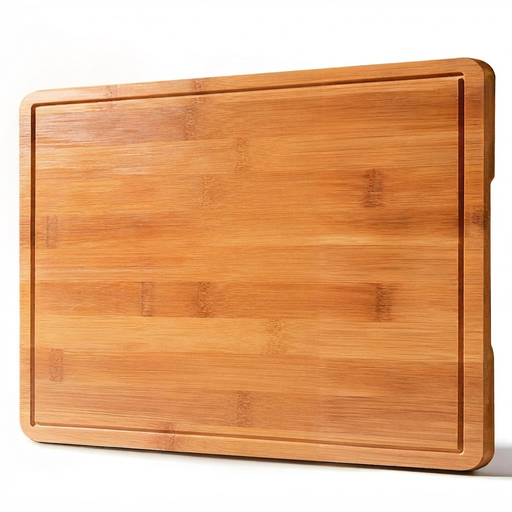
VVM Carbonized Bamboo Cutting Boards with Juice Grooves and Handles
Why it's a good fit: Ideal for anyone looking for a functional and durable everyday board without a large investment. It combines all the essential practical features in one solid package.
The carbonisation (heat treatment) increases resistance to warping and moisture absorption, addressing the typical problems of unstable constructions.
Integrated juice groove and handles for clean work and easy handling. The size of 40.6 x 29.2 cm is versatile for many uses.
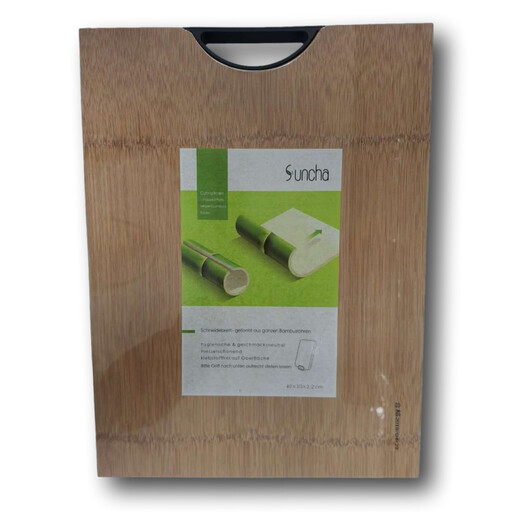
Suncha Whole Bamboo Cutting Board (with Handle)
Why it's a good fit: For chefs who value the highest material quality and craftsmanship. This board is designed for longevity and particularly hygienic use.
According to the manufacturer, it is crafted from a whole bamboo culm using a special technology, making the surface seamless and glue-free. This minimises the risk of cracks and swelling seams.
The massive thickness of 26 mm ensures extreme stability. The glue-free surface is a clear quality mark for natural food preparation.
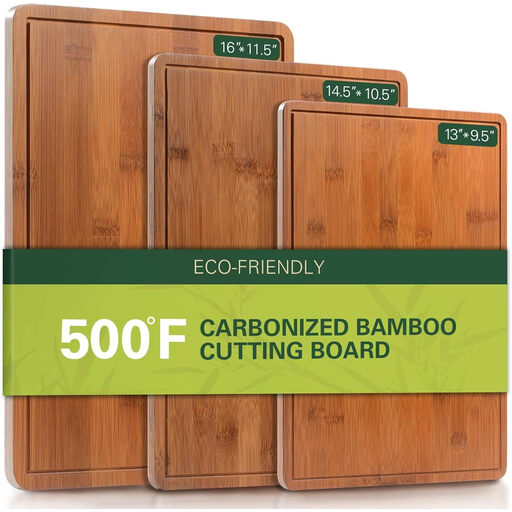
VVM Carbonized Bamboo Cutting Boards for Kitchen, Set of 3
Why this set is a good fit: Perfect for families and anyone who wants the right board on hand for every task—from a small snack to a large feast. The uniform look also makes a great impression when serving.
The cross-laminated core and carbonisation ensure high dimensional stability for all three boards. Each board is equipped with a juice groove and handles, so no functional compromises are made.
Three different sizes (S, M, L) offer maximum flexibility for preparation and serving. The consistent inclusion of a juice groove and handles is very practical.
Looking for more options?
We have curated a selection of products that meet these criteria and stand out for their practical features.
Frequently Asked Questions
How often should a bamboo cutting board be oiled?
The frequency depends on usage. As a rule of thumb, it's recommended to treat a new board with a food-safe oil before its first use and then about once a month thereafter. If the surface looks dry or dull, it's time for a new oiling. This saturates the pores and prevents the board from absorbing moisture or odours.
Are wooden cutting boards more hygienic than plastic ones?
Studies suggest that wood, especially dense woods and bamboo, has natural properties that can inhibit bacterial growth. On plastic boards, bacteria can accumulate in deep knife cuts and are difficult to remove. Regardless of the material, proper and regular cleaning is crucial for kitchen hygiene. Wood and bamboo boards should always be washed by hand and dried thoroughly.
Can I also use a large wooden cutting board as a serving board?
Yes, absolutely. A large, aesthetically pleasing kitchen board made of wood or bamboo is excellent as a serving board. Models with handles or an elegant shape, such as a walnut cutting board, are particularly decorative for arranging cheese, charcuterie, bread, or antipasti. Be careful not to place very hot pots or pans on the board to avoid scorch marks.