
Balcony Power Stations: Your Guide to the Right Plug-In Solar System
Rising electricity prices and a desire for greater independence from energy suppliers are motivating many people in Germany to consider generating their own power. A balcony power station offers a straightforward entry point. As a Joybuy Product Recommendation Officer, my role is to provide you with clear, objective guidance to help you make an informed decision. This article explains the key criteria for selecting a plug-in solar system and introduces a few recommended models.
What to Look for When Buying a Mini Solar System
Choosing the right model depends on your individual needs and on-site conditions. The following three points will help guide your decision.
1. Power Output and Inverter (up to 800W)
Since 2024, feeding up to 800W of power from a mini solar system into your home's grid has been simplified in Germany. While the total output of the solar panels can be higher, the crucial factor is the inverter's output power, which must be limited to 800 watts. An inverter converts the direct current (DC) generated by the solar panels into the alternating current (AC) used in your household. Ensure the inverter complies with current standards (e.g., VDE-AR-N 4105) to guarantee safe operation.
2. With or Without a Storage Battery?
A balcony power station with a storage battery allows you to store the solar energy generated during the day and use it in the evening or at night. This increases your self-consumption rate and can further reduce your electricity bill. Systems without a battery feed the generated power directly into the home grid for immediate use. Any surplus power is fed into the public grid without compensation. The decision depends on your consumption patterns and budget:
- Without Storage: Lower initial cost, ideal if you have a constant base load during the day (e.g., refrigerator, standby devices, home office).
- With Storage: Higher initial cost, but enables maximum use of your own solar power, especially beneficial for professionals who are primarily at home in the mornings and evenings.
3. Installation and Location
The term Plug and Play Solar highlights the main advantage of these systems: simple installation. Most kits are designed to be set up without the help of an electrician. However, the location is critical for the energy yield. A solar system for the balcony should ideally face south and have minimal shading. Many models offer flexible mounting systems for balcony railings, patios, garage roofs, or for ground-mounting in the garden. Before purchasing, check if the included mounting hardware is suitable for your intended location.
Recommended Balcony Power Stations
Based on the criteria mentioned, we have curated a selection of products that cater to different needs.
1. TSUN TSOL-ESK400-PS: The Flexible All-in-One System
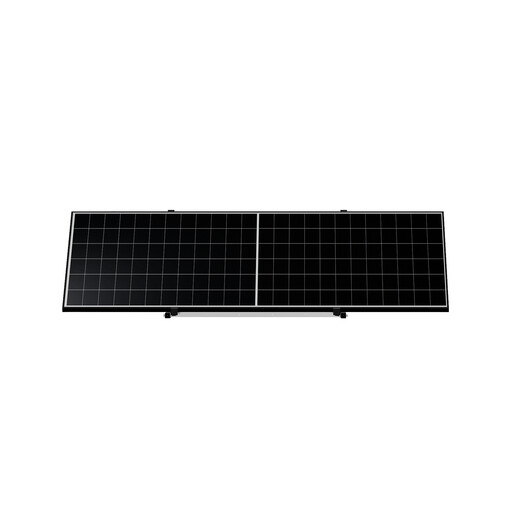
View Product: TSUN TSOL-ESK400-PS 400W
Why it stands out: The TSUN kit is designed as a pre-assembled unit with an integrated solar panel, microinverter, and adjustable stand. This reduces installation effort to a minimum. Its foldable design and adjustable tilt angle make it exceptionally versatile.
Advantages:
- All-in-One Design: No need for complicated assembly of individual components.
- Adjustable Angle: The tilt angle can be adjusted to optimise sun exposure.
- High IP Rating: With an IP67 rating, the system is built for permanent outdoor use.
- Plug and Play: Unpack, set up, plug into an outlet—and you're done.
Who it's for: This model is perfect for renters or users looking for an extremely simple and portable solution. It's ideal for use on flat surfaces like patios, flat roofs, or in the garden, and can be easily taken with you when you move.
2. Skyworth 900W: Maximum Panel Power in a Kit
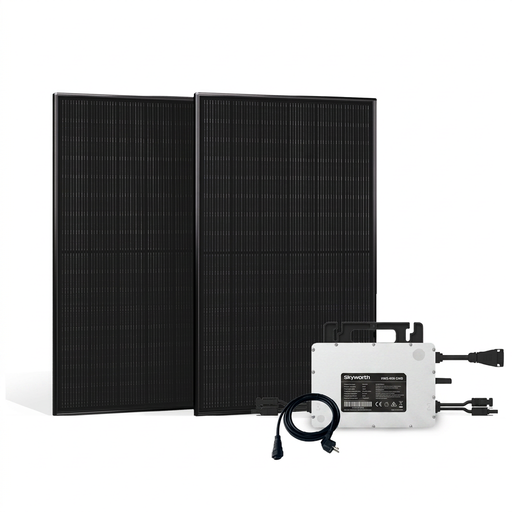
View Product: Skyworth 900W All Black Solar Panels
Why it stands out: The Skyworth system combines two powerful 450-watt solar panels with a matching HMS-800-2WB microinverter. The total panel output of 900W ensures that the 800-watt inverter can deliver its maximum power even in sub-optimal light conditions (e.g., on slightly cloudy days). The all-black design provides a discreet and sleek aesthetic.
Advantages:
- High Panel Output: 900W total panel power to maximise energy yield.
- Aesthetic Design: The "All-Black" look blends seamlessly into its surroundings.
- Complete Kit: Includes two solar panels and the corresponding inverter.
Who it's for: This kit is aimed at users who want to get the maximum permissible yield from their system and have enough space for two solar panels. It's a great choice for homeowners or renters with larger balconies or patios.
3. Jackery SolarVault 3 Pro: The Power Station with Intelligent Storage
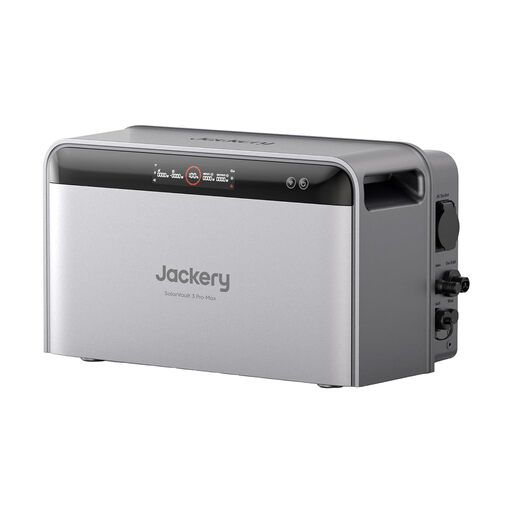
View Product: Jackery SolarVault 3 Pro with Storage
Why it stands out: The Jackery SolarVault 3 Pro is more than just a balcony power station; it's an intelligent energy storage system. With an expandable storage capacity from 2.52 kWh to 15.12 kWh and a high PV input of up to 4000W, this system is designed for comprehensive energy independence. Its AI-driven controls automatically optimise energy consumption.
Advantages:
- Large, Expandable Storage: Enables the use of solar power around the clock.
- Intelligent Energy Management: An AI function forecasts solar production and optimises self-consumption to reduce electricity costs.
- High Compatibility: Can be combined with existing solar installations and supports up to four MPPTs for maximum flexibility in panel orientation.
- Intuitive Control: A user-friendly app for monitoring and controlling the entire system in real time.
Who it's for: This system is the right choice for demanding users and homeowners who want to maximise their self-consumption, protect against power outages, and invest in a future-proof, expandable solution. It is ideal for tech enthusiasts who want to intelligently manage their energy.
Looking for more solar-powered solutions?
If you want to enhance your outdoor space not only with energy but also with atmospheric lighting, you'll find other interesting options in our selection of solar-powered products.
Discover our selection of rectangular LED solar patio lights here
Frequently Asked Questions (FAQ)
1. What do I need to consider when registering a balcony power station?
In Germany, the registration process for a balcony power station up to 800 watts has been greatly simplified. You only need to register the system in the Market Master Data Register (MaStR) of the Federal Network Agency. An additional registration with the grid operator is generally no longer required, provided you do not have an outdated electricity meter (e.g., one with a rotating disc and no backstop).
2. How much electricity can an 800W balcony power station generate?
The annual energy yield of an 800W balcony power station depends heavily on geographical location, orientation, tilt angle, and shading. Under optimal conditions in Germany, such a system can generate approximately 600 to 850 kilowatt-hours (kWh) of electricity per year. This can be enough to cover the base load of an average household (refrigerator, router, standby devices) throughout the year.