
Buying Asian rice crackers: a guide to choosing crunchy rice snacks
Asian rice crackers vary considerably in their ingredients, seasoning, pack size and texture. Whether you’re looking for Chinese rice crackers, Japanese senbei or crunchy rice snacks from Thailand and Vietnam, the product name alone tells you little about the flavour or ingredients. So if you’re looking to buy rice crackers for a particular reason, don’t rely solely on eye-catching packaging or flavour claims.
Common pitfalls when buying Asian rice crackers
1. ‘Rice cracker’ doesn’t always mean it’s mostly rice
Some products are made largely from rice, while others also contain corn, millet, wheat, soya or starch. The percentage of the main ingredient is listed in the ingredients or quantitative ingredient declaration. For example, the stated rice content of WANT WANT Fried Senbei Rice Crackcer is 60.91%. Wumingxiaozu Crispy Rice Crisps Hunan Style, on the other hand, are made from a mixture of cornflour, soya flour, wheat flour and millet flour.
If you’re looking for a particular texture or a pronounced rice flavour, check the ingredients before you buy.
2. Heat and seasoning can be perceived differently
‘Hot’, ‘spicy’ and ‘Hunan Style’ don’t indicate standardised levels of heat. One product might contain chilli, Sichuan pepper, garlic and cumin, while another tastes mainly salty or smoky. Wumingxiaozu Crispy Rice Crisps list chilli powder, garlic, onion, Sichuan pepper and cumin among their ingredients. WANT WANT Mini Fried Rice Crackers, by contrast, combine a mild heat with sugar and sweetener.
A bold seasoning can be just the thing for a film night or to enjoy with beer. A milder option is often more practical with tea or as a snack to share.
3. Larger packs aren’t always better value for everyday use
A 520g pack such as WANT WANT Senbei (Large) contains 88 individually wrapped portions. That can work well for families, offices or parties, but it doesn’t automatically prevent the snacks from losing quality once the outer packaging has been opened. Smaller bags make it easier to portion out what you need. So it’s not just the pack price that matters: consider the weight, individual portions and storage too.
What to check before you buy
Ingredients and allergens
Check the order of the ingredients: it shows which ingredients are present in the largest quantities. Common allergens in Asian snacks include:
- Soya and wheat or gluten, from soya sauce or seasoning mixes
- Sesame in sesame rice crackers and some seasoned varieties
- Fish or prawns in products with bonito, seafood or prawn flavouring
- Milk in chocolate-coated or similarly seasoned snacks
Even products with similar names can contain different allergens. Always follow the information on the packaging you receive.
Nutritional values per 100g
For a fair comparison, look at the values per 100g. The product selection shows a wide range: Wumingxiaozu lists 507 kcal and 2.0g of salt per 100g, WANT WANT Fried Senbei 529 kcal and 1.9g of salt, while WANT WANT Senbei (Large) is listed at 460 kcal and 1.25g of salt.
Seasoned, fried or oil-based varieties can have higher fat and salt levels. That doesn’t make them better or worse, but it can help you choose a snack for everyday eating.
Packaging and storage
Crunchy rice snacks are sensitive to moisture. Look for:
- resealable bags or individual portions,
- a cool, dry place to store them,
- protection from direct sunlight,
- prompt consumption after opening.
A product with clear storage instructions is easier to keep fresh for everyday use. Individually wrapped portions are especially useful in larger packs.
Our picks for different shoppers
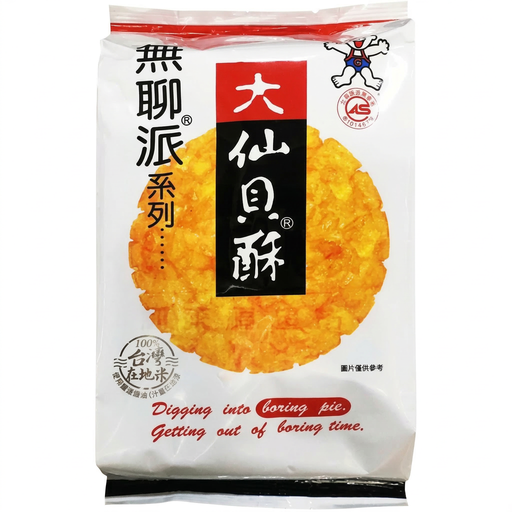
WANT WANT Fried Senbei Rice Crackcer 155g
Why it suits this shopper: The 155g pack is a manageable introduction to Chinese rice crackers, with a classic savoury seasoning.
The stated rice content of 60.91% makes the ingredients clearer than a claim featured only on the front of the pack.
155g pack, ready to eat straight from the pack, with nutritional values listed per 100g.
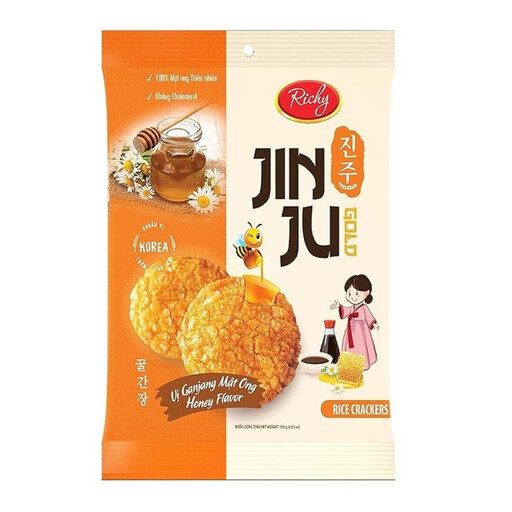
Richy Jin Ju Rice Cracker, Honey Flavour, 100g
Why it suits this shopper: The combination of honey and soya sauce notes will appeal if you’re after sweet rice crackers with a savoury twist.
The product details list 51% rice, 4.6% honey, and soya and wheat as allergens. That makes it easier to assess the flavour profile.
Individually wrapped pieces in a 100g pack; according to the product details, made with 100% Japonica rice.
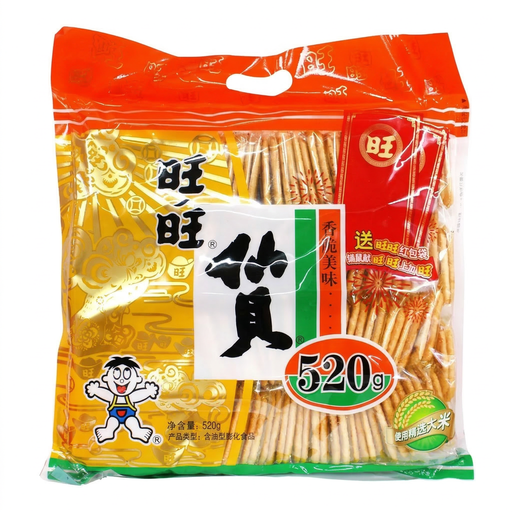
WANT WANT Senbei (Large) 520g (Contains 88 Packs)
Why it suits this shopper: The large pack contains 88 individual portions, making it a handy choice for offices, families, parties and regular snack breaks.
The individual packs reduce exposure to air and moisture, which can affect crispness in large bags once opened.
520g total weight, 88 portions and, according to the product details, 1.25g of salt per 100g.
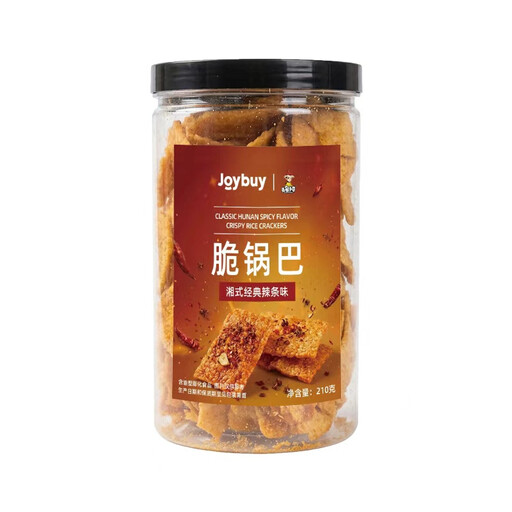
Wumingxiaozu Crispy Rice Crisps Hunan Style Classic Spicy Flavour 210g
Why it suits this shopper: The Hunan-style seasoning combines chilli, garlic, Sichuan pepper and cumin for a distinctly bold flavour.
The seasonings and all four types of flour are listed specifically. Soya and wheat are also identified as allergens.
210g pack, ready to eat, with a clearly stated ingredient breakdown of 22% cornflour, 16% soya flour, 16% wheat flour and 16% millet flour.
More varieties for different tastes
If you’re after seaweed rice crackers, consider Bin Bin Rice Cracker Seaweed Flavour or WANT WANT Thick Roasted Seaweed Rice Crackers. Both may contain allergens such as soya and wheat; the WANT WANT variety also contains fish and liquorice.
If you prefer sweet rice snacks, Bin Bin Rice Crackers Coconut Flavour has a coconut note. For a chocolatey option, try Alnatura Organic Milk Chocolate Rice Cakes. Frigeo Knusper Pufetti Crispy Rice Cakes combine rice and corn with a sugar coating and fruity tang. These products focus more on flavour and sweetness than savoury rice crackers.
Storage and serving
Store the packs in a cool, dry place away from direct sunlight. Once opened, seal the packaging as tightly as possible. If the snacks come in individual portions, open only as many packs as you plan to eat. You’ll find the best-before date on the relevant packaging.
Looking for more options?
We’ve put together a complete, regularly updated list of products that fully meet these strict selection criteria and the safety regulations in force in the EU.
Frequently asked questions about Asian rice crackers
What are Japanese senbei?
Japanese senbei are usually crunchy rice crackers that are baked or roasted and often seasoned with soya sauce, salt, seaweed or sweet ingredients. Similar products from China, Taiwan, Thailand and Vietnam are also sold under names such as rice crackers.
How can I keep rice crackers crunchy after opening?
Store them somewhere dry and seal the pack straight after taking some out. Individual portions are handy because the rest of the snacks aren’t repeatedly exposed to moisture in the air. If the texture has gone soft, check the packaging for damage.
Which rice crackers go well with tea or beer?
Mild, savoury varieties such as original senbei often go well with tea. Spicy rice crackers with chilli, garlic or Sichuan pepper are often chosen as a bolder snack with beer. Sweet varieties with honey, coconut or chocolate are better suited to coffee breaks or as a dessert snack.