
Buying Asian Bao Buns and Filled Breads: A Guide to Taste, Preparation and Storage
If you’re looking to buy Asian bao buns and filled breads online, you’ll find plenty to choose from: baozi, Chinese steamed buns, sweet Asian breads, savoury bao buns and frozen products for a quick meal. The names aren’t always clear, though. A filled bread isn’t necessarily a bao bun, and a soft bun doesn’t always need to be steamed.
When choosing, filling content, preparation method, storage conditions and portion size matter more than eye-catching packaging. This buying guide explains what families, professionals, students and fans of Chinese cuisine should look out for.
Common buying mistakes with baozi and Asian breads
1. Treating “bao” as another word for any filled bread
Baozi and Char Siu Bao are usually steamed. Other products, such as Rou Jia Mo and Chinese flatbread, are baked or fried, or filled after heating. Sweet breads with bean paste are also better classed as Asian bakery products than as classic steamed bao buns.
Before buying, check whether the product:
- is already filled,
- is a bread intended for you to fill yourself,
- is steamed, baked, fried or simply heated,
- needs to be stored at room temperature or in the freezer.
2. Assuming the product name tells you how much filling it contains
Names such as “Chestnut”, “Red Bean” or “Milk” alone don’t tell you much about the actual ingredients. For example, Bakery Village Fresh Torn Bean Toast has a stated red bean filling content of at least 15%. Thinmax Fresh Pull-Apart Bean Bread has a stated filling content of at least 8%.
If you’re looking for a generously filled bakery product, check the quantitative ingredient information. For savoury products, it’s also worth checking whether meat, seafood or vegetables are listed as significant ingredients by weight.
3. Mistaking quick preparation for ready to eat
Some products are ready to eat and just need to be opened. Others can be steamed straight from the freezer. Frozen bao often shouldn’t be refrozen once thawed. For products filled with meat or seafood, make sure you follow the stated heating time.
That’s why the product instructions matter more than any general preparation time. An unfilled bao bun may be ready to serve after 3 to 6 minutes of steaming, while filled Char Siu Bao may take around 15 minutes.
The key things to consider
1. Filling and flavour
Red bean paste, chestnut filling, coconut or salted egg yolk make great sweet snacks. Examples include Bakery Village Coconut Red Bean Bread, with at least 14% red bean paste, and Bakery Village Egg Yolk Bun, filled with a mixture based on salted egg yolk and mung bean paste.
Savoury bao buns often contain pork, vegetables or a seasoned sauce. According to its ingredients list, MENGFU Charsiu Bao has a filling content of 40%, including 28% pork. If you want to avoid seafood, check for crab, fish and other allergens in products such as Siu Long Soup Bun.
2. Preparation method and equipment
A steamer is useful for Chinese steamed buns, but it isn’t essential. Depending on the product, you may also be able to use a microwave, frying pan, oven or air fryer.
Look out for the following information:
- Steam straight from frozen: no need to thaw first.
- Microwave-safe: check the wattage and cooking time so the filling heats through evenly.
- Bake or fry: suitable for Chinese flatbread and Rou Jia Mo.
- Ready to eat: only assume this if the product is explicitly labelled “ready to eat”.
3. Weight, storage and allergens
Individual 85g portions are ideal for breakfast, breaks or a snack. Larger packs of 350 to 700g are more practical for families, stocking up or serving across several meals. Frozen products generally need to be stored at −18 °C or below.
Also check the allergen information before buying. Products often contain wheat or gluten, soya, egg and milk. Depending on the filling, sesame, mustard, nuts, crustaceans, fish or molluscs may also be listed.
Our picks for different needs
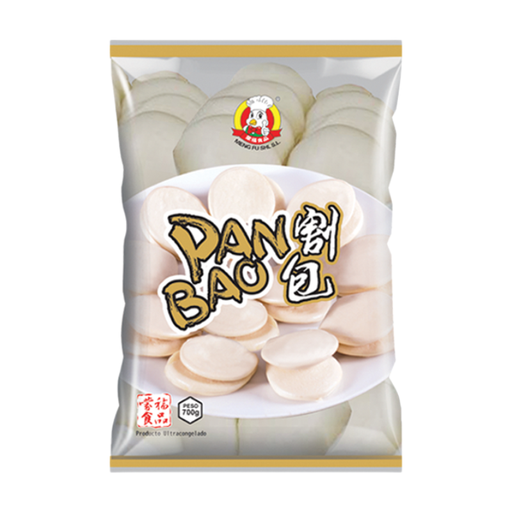
Meng Fu Bao Bread 700g
Why it suits this profile: This unfilled bao bread can be paired with meat, vegetables or crispy chicken, and steamed straight from frozen.
The instructions specify steaming from frozen for 3–4 minutes, so there’s no need to guess when it’s thawed.
A 700g pack, just five ingredients according to the product information, and a versatile base for filled bao buns.
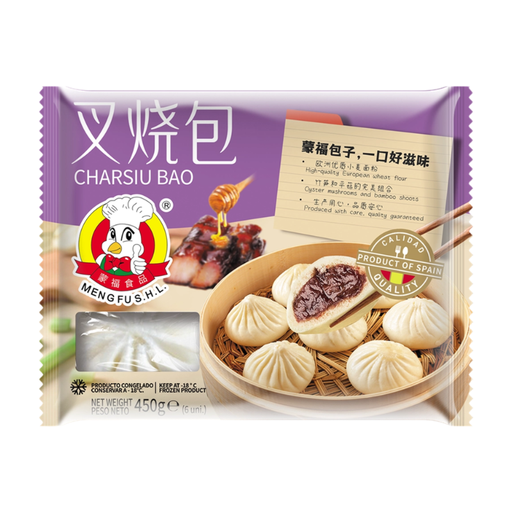
MENGFU Charsiu Bao 450g
Why it suits this profile: The filling is described as a Char Siu variety with pork and a seasoned sauce, making it a good choice for fans of savoury baozi.
The stated filling content of 40% makes it easier to gauge the balance of dough and filling than a flavour name alone.
A 450g pack, with steaming from frozen taking around 15 minutes.
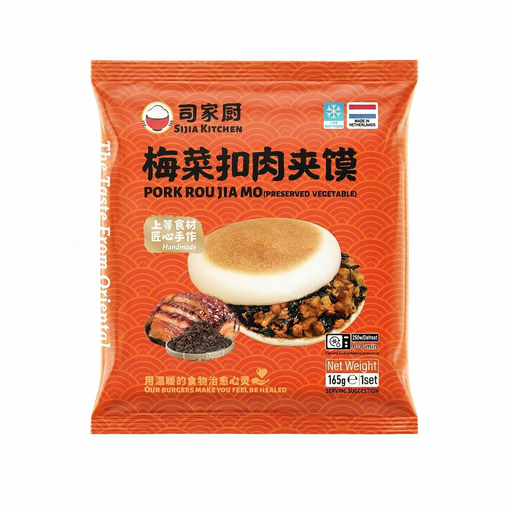
SIJIA Kitchen Pork Rou Jia Mo (Preserved Vegetable) 165g
Why it suits this profile: Rou Jia Mo combines Chinese flatbread with braised pork and preserved mustard greens to make a satisfying snack portion.
The ingredients list states 40% pork and gives preparation options for the microwave, oven, frying pan or air fryer.
A 165g portion, frozen storage at −18 °C and several clearly stated heating options.
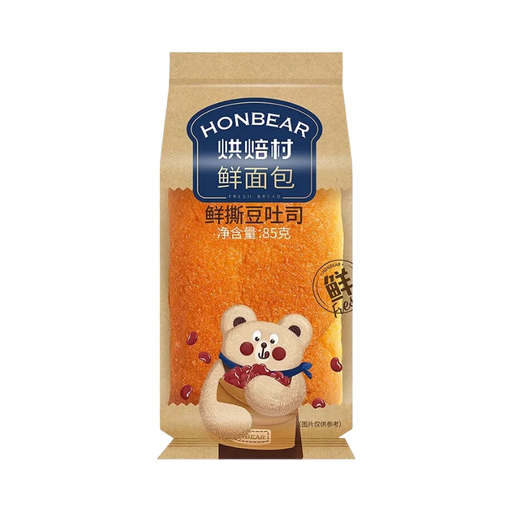
Bakery Village Fresh Torn Bean Toast 85g
Why it suits this profile: This individual 85g bread is ready to eat and, according to the product information, contains at least 15% red bean filling.
The portion size and stated filling content make it easier to plan than with large, unportioned packs.
Ready to eat at room temperature; the product information says it can be warmed for around 15 seconds.
Looking for more options?
We’ve put together a complete, regularly updated list of products that meet these strict selection criteria and fully comply with the safety regulations in force in the EU.
FAQs about Asian Bao Buns and Filled Breads
How do you prepare frozen bao properly?
Check the packaging for the specific instructions. Many unfilled bao breads can be steamed straight from frozen. Filled products may need longer. As a rule, frozen products shouldn’t be refrozen after thawing unless the packaging says otherwise.
How long do Asian bao buns keep?
For frozen products, the best-before date depends on the packaging and whether the storage temperature has been maintained consistently, usually −18 °C or below. Products stored at room temperature should be kept somewhere cool and dry, away from direct sunlight. Once opened, follow the manufacturer’s instructions.
Which bao buns are suitable for families?
Packs weighing 350 to 700g are handy for several people, such as sliced steamed buns or unfilled bao bread. You can serve them with a choice of fillings. Individual portions of 85 to 165g are better suited to breaks, breakfast or a snack with a set portion size.