
Artificial Plants as Décor: A Buying Guide for Homes, Offices and Commercial Spaces
Artificial plants as décor offer a practical way to add greenery to rooms without watering, repotting or worrying about suitable light levels. However, not every decorative arrangement creates a harmonious look. Product images can disguise proportions, plastic surfaces vary in appearance depending on their finish, and an unsuitable planter can damage furniture or walls.
This buying guide explains what shoppers in Germany should look out for, which styles suit different uses and which details should be checked before buying.
Common Buying Mistakes When Choosing Artificial Plants
1. Misjudging the stated height
An artificial grass plant measuring around 10 inches, or approximately 24 cm, is better suited to a desk, windowsill or shelf than to an open floor corner. By contrast, an artificial olive tree measuring 1.2 m needs plenty of floor space and should not be placed directly in a narrow passageway.
That is why the width, depth and shape of the planter are just as important as the overall height. For table decorations with plants, a long container can take up more room than a single round pot, even if both are a similar height.
2. Confusing “maintenance-free” with “no cleaning required”
Artificial plants that need no care require no water, fertiliser or sunlight. However, dust still settles on plastic leaves, grass blades and decorative stones. Occasional cleaning with a soft, dry cloth is therefore part of normal use.
A plastic product may also have a noticeable odour when new. This can occur, for example, with artificial succulents containing plastic components. Airing the product in a well-ventilated area can be helpful. With delicate surfaces, check first whether the material can tolerate moisture before cleaning it.
3. Overlooking the material and stability
A wooden planter can give an arrangement more weight and a homely feel, while plastic is easier to move. At the same time, the construction should suit its surroundings: on a desk, protective pads on the underside are useful, whereas on a wall, the fixing method and load-bearing capacity are more important.
Plastic plants should also be kept away from naked flames and strong heat sources. A purely indoor design is not automatically suitable for outdoor use. The relevant product description and safety instructions provide the definitive guidance.
Parameters to Check Before Buying
Size and floor space
Measure the intended space not only for height, but also for depth and width. Compact potted artificial plants are ideal for a sideboard or conference table. Long arrangements can act as a table centrepiece, but they need a sufficiently large surface to stand on.
Also check whether doors, windows or drawers can still be opened fully. In offices, a shallow depth is often more important than choosing the tallest possible plant.
Material of the planter and plant
Look for specific material details such as plastic, PVC, EVA, MDF, solid wood or polyethylene (PE). These can help you assess the weight, care requirements and suitable applications. A wooden planter often works well in living and working areas, while PE planters are lightweight and easy to reposition.
With decorative planters, it is also worth checking whether they have a drainage outlet. Artificial arrangements do not need drainage, so the absence of a drainage hole is not a defect if the planter is used solely for decorative purposes.
Fixing and stability
For table and shelf decorations, the planter should stand flat and securely. Pads on the underside can protect delicate surfaces from scratches. With artificial wall plants, however, the supplied brackets, screws and wall plugs are important. Before installation, check that the wall is suitable for the fixing system.
An artificial plant should not be placed where it could easily be knocked over. Small decorative stones should also be kept away from young children and pets if the manufacturer warns of a potential choking hazard.
Our Selection by User Profile
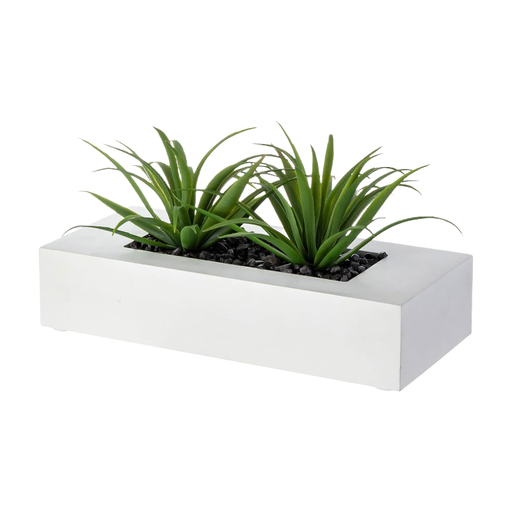
MyGift 10-Inch Artificial Grass Plant in White Rectangular Wooden Planter & Desk Decoration Faux Greenery
Why this product suits this profile: With an overall height of approximately 10 inches, this compact design is intended for desks, windowsills, shelves and small surfaces.
The stated size makes planning easier. The white rectangular planter and four underside pads are clearly described, so the decoration does not sit directly on the surface.
Wood and plastic elements; according to the product description, no watering or sunlight is required. Clean with a soft cloth.
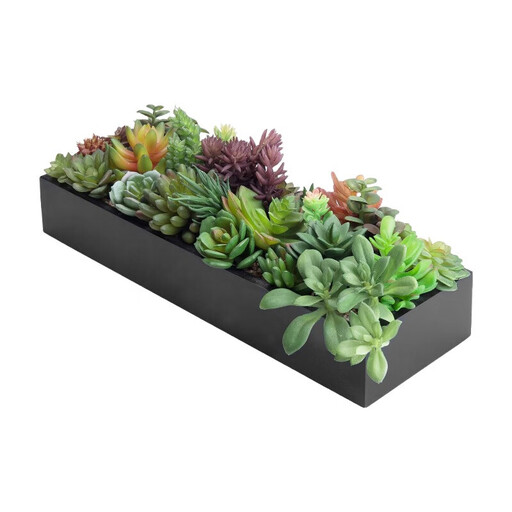
MyGift Artificial Succulent Centerpiece, 15.75 Inch Faux Succulents Arrangement
Why this product suits this profile: This long arrangement is designed as a table centrepiece or an accent for a sideboard, desk or windowsill.
The dimensions of 15.75 × 5.1 × 6 inches make the space required easy to understand. According to the description, the planter is made from black MDF wood, while the plants are plastic.
Rectangular shape for longer surfaces; no watering or sunlight required. The product details mention an initial plastic odour.
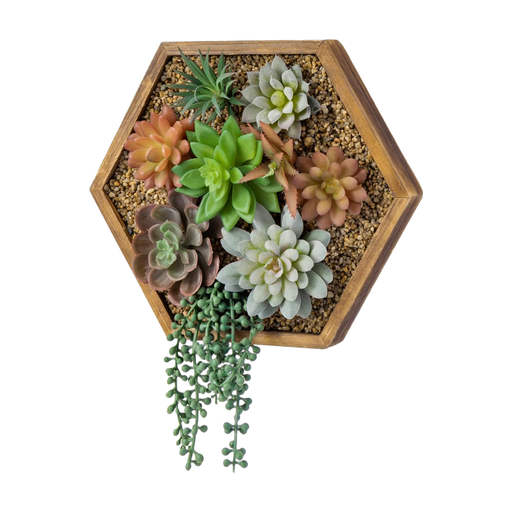
MyGift 3D Art Wall Hanging Succulent Plants
Why this product suits this profile: This hexagonal wall decoration is suitable for homes, offices and commercial areas where floor or surface space is limited.
The fixing is not merely listed as a general benefit: according to the product description, brackets, screws and wall plugs are included. The wall’s load-bearing capacity should still be checked.
Wall mounting saves table space; dimensions of approximately 11.4 × 1.6 × 10 inches. A combination of a wooden frame and artificial succulents.
Using Artificial Plants Effectively
For an office with limited daylight, compact artificial office plants are a practical alternative to living greenery. Low, long arrangements usually cause less obstruction on reception desks or meeting tables than tall plants. In rented homes, wall decorations or lightweight planters can be a sensible choice, provided they can be installed and later removed with minimal residue.
An artificial olive tree is better suited to open corners beside a sofa, chest of drawers or entrance area. Make sure it has a stable base and is positioned a safe distance from radiators. Sets of artificial grass plants or artificial succulents are ideal for several smaller spaces. Varying heights and planter colours can help create a coordinated look without every arrangement having to be identical.
If you are looking for a wider range of wooden planters, wall decorations and matching home accessories, you can find more options in the wood-effect décor category.
Looking for more options?
We have put together a complete, regularly updated list of products that fully meet these strict selection criteria and the safety regulations applicable in the EU.
FAQ About Artificial Plants as Décor
How long do artificial plants used as décor last?
Their lifespan depends on the material, finish, location and cleaning routine. Indoors, plastic plants can remain attractive for a long time if they are protected from prolonged direct sunlight, heat and moisture. Without specific information from the manufacturer, it is not possible to give a general guarantee for a particular service life.
Do artificial plants involve ongoing costs?
Under normal use, there are usually no ongoing water or fertiliser costs. The costs to consider are the purchase price and, where applicable, the cost of an additional planter, wall mounting or replacement parts. Cleaning usually requires only a soft cloth.
How can I arrange artificial plants so they look natural?
Start by choosing a planter whose size suits both the plant and the available space. Arrangements with decorative stones should stand securely and should not look overcrowded. For wall plants, mounting them at eye level or slightly above is usually a good option. It is also important not to place plastic plants directly beside naked flames or strong heat sources.