
TV Backlighting Buyer's Guide for Home Theater
A well-chosen TV backlight can fundamentally transform your movie and gaming experience. It not only creates an immersive atmosphere but can also help reduce perceived eye strain in dark rooms. However, with the vast array of systems available—from simple LED strips to camera-controlled solutions—making the right choice isn't always easy.
This guide is here to help. We'll introduce different technologies and present a selection of products to make it easier for you to decide on the perfect indirect TV lighting for your home.
What to Look for When Choosing a TV Backlight
To make the right choice, it helps to understand a few technical basics and how they work.
1. Synchronisation Technology: Static, Reactive, or Screen-Synced?
The way the lighting is controlled is the key differentiating feature.
- Static & App-Controlled Lighting: Simple RGB LED strip systems are often controlled via a remote or an app. They allow you to select a static color or predefined effects. Some models offer a music mode where the lights pulse to the beat of ambient sounds.
- Screen-Sync Lighting (Camera System): If you want to retrofit an Ambilight-style system for dynamic lighting, you should look for systems with a camera. A camera captures the colors at the edge of the screen in real-time and relays this information to the LED strips. The result is an ambient light that dynamically adapts to the on-screen content, visually extending the experience beyond the TV.
2. LED Technology: The Difference Between RGB and RGBIC
The type of LEDs used significantly influences the quality of the lighting effects.
- RGB: Conventional RGB strips can only display one color at a time across their entire length. Color changes affect the whole strip at once.
- RGBIC: This more advanced technology integrates an independent control (IC) chip into each segment of the LED strip. This allows an RGBIC LED strip to display many different colors simultaneously. This enables smooth color transitions and complex, dynamic effects, which are especially crucial for a more immersive result with screen synchronization.
3. Installation and Compatibility
Ensure the system you choose is compatible with your TV and living space. Pay attention to the supported screen size, the power source (USB or power adapter), and the ability to integrate with existing smart home systems like Google Home or Amazon Alexa. This is particularly relevant for a modern gaming room lighting setup.
Recommended TV Backlight Models
Here is a selection of products that cover different needs and use cases.
VIVREAL 5m USB LED Strips Multi-Color
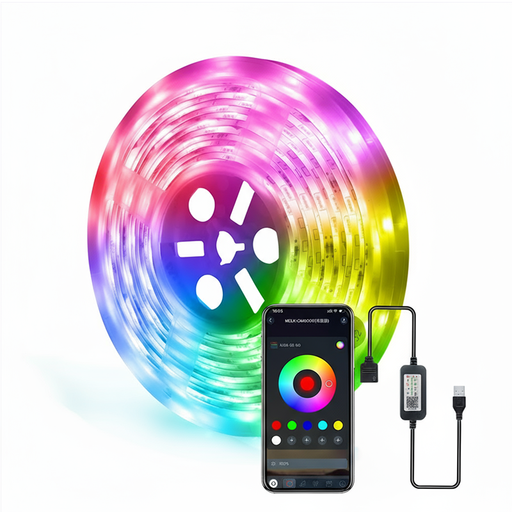
What sets it apart: This system offers a straightforward and flexible solution for creating atmospheric ambient lighting. At 5 meters long and powered by USB, it is highly versatile.
Pros:
- App Control: Easily adjust brightness, colors, and effects via a mobile app.
- Music Sync: The lights react to ambient sounds, changing in rhythm with music or movie audio.
- Simple Power Supply: Operates via any 5V USB port, such as one on the TV itself or a power bank.
- Flexible Application: The 5-meter length is suitable not only for TVs but also for general gaming room lighting or decorative purposes.
Who is it for? For users looking for a simple and cost-effective LED TV backlight to create static or music-reactive ambient lighting, without needing direct synchronization with the on-screen content.
Govee TV Backlight 3 Lite for 55-65 Inch TVs
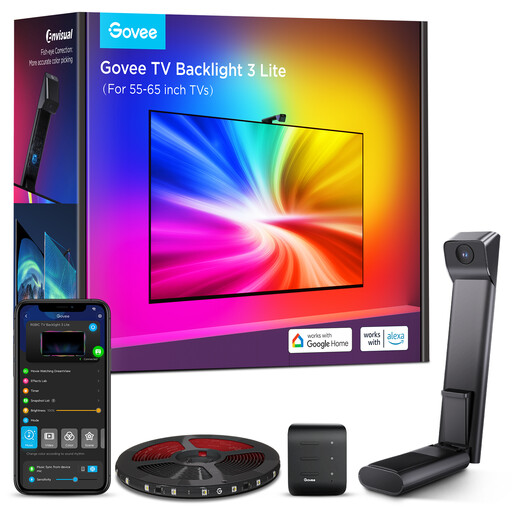
What sets it apart: The Govee TV Backlight 3 Lite is an entry-level system into the world of screen-sync lighting. It uses a camera and Govee's proprietary RGBIC technology to project the colors from your TV screen onto the wall behind it.
Pros:
- Camera Sync: The camera captures screen colors and dynamically adjusts the lighting to create an immersive viewing experience.
- RGBICW Technology: In addition to millions of colors, this system can also display pure warm white, which is useful for pleasant, everyday indirect TV lighting.
- Smart Home Integration: The system is compatible with Google Home and Amazon Alexa and can be controlled via app or voice commands.
- Optimized for 55-65 Inches: The strip length and calibration are specifically designed for common TV sizes.
Who is it for? For home theater and smart home users looking for a reliable and affordable solution to retrofit an Ambilight-style system and upgrade their entertainment setup with dynamic, screen-synced lighting.
Govee Envisual TV Backlight T2 with Dual Cameras for 55-65 Inch TVs
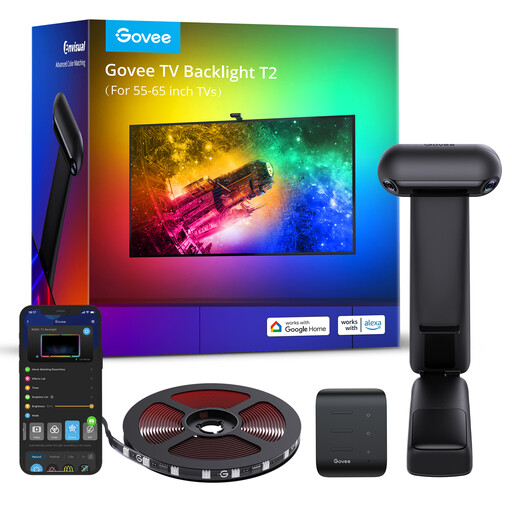
What sets it apart: The Govee Envisual T2 represents an evolution in camera-based synchronization. By using two cameras, it achieves higher precision in color capture and a faster response time.
Pros:
- Dual-Camera Technology: The dual cameras capture on-screen content with increased accuracy, resulting in more precise and fluid color reproduction at the edges.
- Advanced RGBIC Effects: The Govee Home app offers a wide range of customizable scenes and effects for highly personalized lighting.
- High Compatibility: Full control via the app, as well as integration with Alexa and Google Assistant voice assistants.
- Engineered for Immersion: The system is designed to seamlessly extend the visual perception of the image into the surrounding environment, ideal for movies and intense gaming.
Who is it for? For discerning home theater enthusiasts and gamers who value maximum immersion and an extremely precise, responsive synchronization between the screen and the backlight.
Discover More Options
The models presented here cover common use cases. However, if you are looking for different sizes, specific features, or other alternatives, you can find a broader range of products in our main category.
Discover more TV backlights on Joybuy.de
Frequently Asked Questions (FAQ)
1. Does a TV backlight reduce eye strain? Indirect lighting behind the TV can soften the harsh contrast between a bright screen and a dark wall. This smoother light transition is perceived by many as more comfortable and can contribute to a more pleasant viewing experience during long movie nights.
2. What is the difference between RGB and RGBIC? Standard RGB LED strips can only display a single color across their entire length at one time. RGBIC strips, on the other hand, have integrated control chips (ICs) that allow different segments of the strip to be controlled independently. This makes it possible to display multiple colors simultaneously, resulting in fluid transitions and more dynamic lighting effects.
3. How does a TV backlight with a camera work? Such a system uses a small camera, usually mounted on the top or bottom of the TV. This camera continuously films the screen and analyzes the colors displayed at the edges. The color information is sent to a control box, which in turn instructs the LED strips on the back of the TV to emit the corresponding colors. This creates the impression that the image is extending beyond the frame and onto the wall.