
Choosing Airtight Food Containers: What to Look for When Buying
Whether it’s for leftovers in the fridge, meal prep at the office, or dry goods in your pantry, airtight food containers should save space, seal reliably and be easy to clean. In practice, however, unclear size specifications, unsuitable lids and hard-to-clean seals often lead to disappointing purchases.
This buying guide from the Joybuy Product Recommendation Officer highlights the features that really matter when choosing food storage containers, canisters and boxes.
Common Pitfalls When Buying Airtight Food Containers
1. “Airtight” is used for any type of lid
A loosely fitting lid will protect contents from dust, but it won’t necessarily prevent liquids from leaking. For soups, sauces or moist foods, multi-sided closures with a continuous silicone seal are a better choice. Check whether the manufacturer explicitly states properties such as “leak-proof”, “watertight” or “airtight”.
2. The usable size is overestimated
A container with a 1.5-litre capacity isn’t automatically suitable for every meal. Tall, narrow models use shelf space differently from shallow, rectangular ones. For snacks, 180 to 700 millilitres is often enough, while family portions or salads typically need 1.5 to 3.5 litres. So check the internal dimensions, external dimensions and shape, not just the litre measurement.
3. Microwave and freezer suitability is misinterpreted
With many plastic containers that have a lid, the container may go in the microwave but the lid must not be closed. When freezing, you also need to leave room for the contents to expand. Details such as “microwave-safe up to 120 °C” or “freezer-safe down to -20 °C” are specific usage guidelines, not a general approval for ovens or hobs.
Three Key Selection Criteria
Closure and Seal
For leak-proof lunch boxes and containers holding liquids, closures on several sides are practical. A removable silicone seal makes cleaning easier, but it must be fitted correctly afterwards. Check before you buy:
- Are all the closure clips easy to reach?
- Is the seal continuous and free of visible gaps?
- Can the lid be cleaned separately?
- Are there any details about the seal’s durability or replacement?
An airtight construction reduces contact with outside air, but it doesn’t replace proper cooling and storage of your food.
Material and Labelling
BPA-free food storage containers are often made from polypropylene, or PP for short. What matters is whether the container is suitable for the intended food contact and the relevant temperature. With transparent plastic containers, pay attention to the manufacturer’s labelling for microwave, freezer and dishwasher use.
“Dishwasher-safe” can mean the container should be cleaned on the top rack. Seals should be checked regularly for distortion, cracks or discolouration. Damaged food storage boxes should not be used again.
Stackability and Everyday Practicality
Stackable storage containers make more efficient use of your fridge and pantry. Rectangular shapes are usually easier to place side by side than round models. Round containers, on the other hand, can be useful for soups, dips or individual portions.
For meal prep, a matching set in several sizes is recommended. If you frequently store dry goods, you may instead need a tall container with a wide opening and a lid that’s easy to dispense from.
Recommendations for Different User Profiles
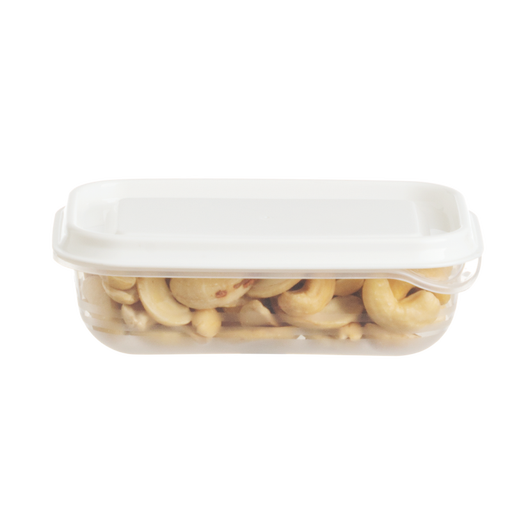
COOKER KING Food Storage Meal Prep Containers, 6-piece
Why this product suits the profile: This set is aimed at households, students and professionals who need multiple portions for meal prep, leftovers or snacks, without having to piece together different individual sizes.
The six containers offer a unified solution and, according to the product details, are reusable, stackable and come with tight-sealing lids. They are not intended for high heat or ovens.
6-piece set, stackable design and reusable plastic material for everyday storage.
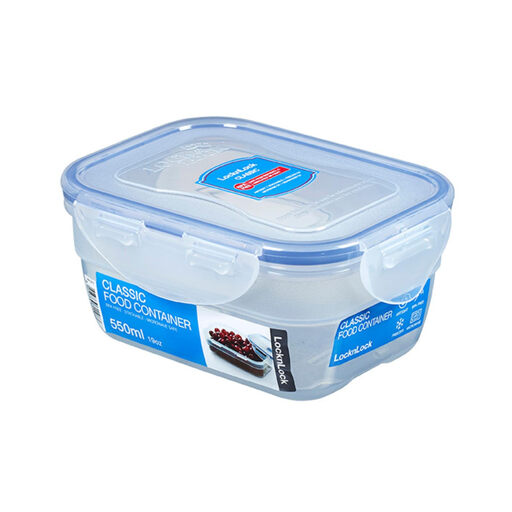
LocknLock Airtight Food Storage Container, 550 ml
Why this product suits the profile: This rectangular single box is ideal for breaks, smaller leftovers and transporting snacks or moist foods. The transparent PP material makes it easy to see the contents.
The four-sided closure construction with a silicone seal is designed for airtight and leak-proof storage. For the microwave, the lid must be removed.
550 ml capacity, BPA-free PP, stackable and, according to the product details, suitable for the freezer and dishwasher.
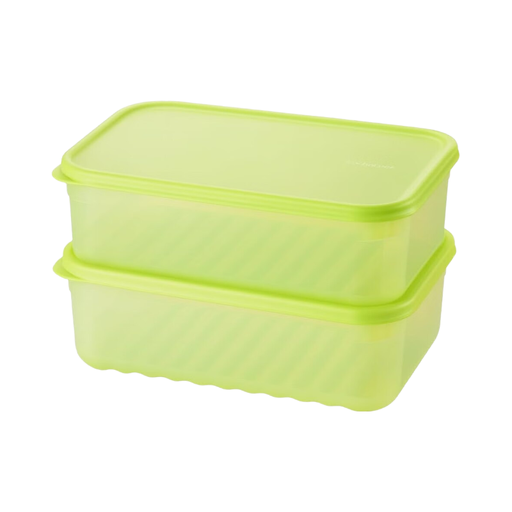
LocknLock Fresh Block Food Container 3.2 l, 2-piece set
Why this product suits the profile: The two large containers are designed for families, larger salads, vegetables, fruit, pantry staples and multi-day meal prep portions.
The large, shallow shape uses fridge space differently from tall containers. According to the product description, the Fresh Block design supports the storage of fruit and vegetables; however, the specific storage conditions of the food still need to be observed.
2 containers, each 3.2 l, intended for fridge, freezer and dishwasher; microwave use without the lid.
Looking for more options?
We’ve put together a full, regularly updated list of products that fully meet these strict selection criteria and the safety regulations in force in the EU.
Practical Use and Care
Before first use, clean the containers and lids with warm water and a mild washing-up liquid. Dry all parts completely before fitting the seal. This prevents trapped moisture and unpleasant odours.
When freezing, don’t fill the container right to the brim. Frozen contents should be allowed to thaw slightly before opening the closure. For the microwave: remove the lid or open it fully, provided the product details allow this. Ovens, hobs and direct heat are not suitable for the plastic models mentioned.
FAQ on Airtight Food Containers
How long do airtight food containers last?
The lifespan depends on the material, usage, temperature changes and cleaning. Check containers, lids and seals regularly for cracks, distortion and a weakening closure. It’s not possible to give a reliable general lifespan.
Are airtight food containers suitable for the microwave?
Some models are microwave-safe, but usually only without the lid closed and within a specified temperature limit. The manufacturer’s instructions for each product are what matter. Microwave suitability does not automatically mean oven suitability.
Which size is best for meal prep?
For individual meals, 550 millilitres to 1.5 litres is often enough. Family portions, salads or larger quantities of ingredients typically need 3 to 3.5 litres. Alongside volume, the shape, stackability and available shelf space in your fridge are also important.