
2026 Action Camera Buyer's Guide: Technical Analysis and Model Selection
Technological development in the action camera sector is continuously advancing. 2026 models are no longer defined by durability alone, but increasingly by their sensor capabilities, the processing power of integrated chips, and AI-powered software features. Parameters such as 8K video resolution, sensor sizes over one inch, and specialised low-light modes have become decisive criteria for professional users and discerning amateurs. This article analyses the technical specifications relevant for selecting a high-performance action camera.
Buyer's Guide: What to Look for in a 2026 Action Camera
Choosing a suitable sports camera is based on an assessment of objective technical features. The following criteria provide a basis for an informed decision.
1. Sensor Size and Resolution
A camera's image quality correlates directly with the size of its image sensor. A larger sensor, such as a 1/1.3-inch sensor, can capture more light per pixel. This results in higher dynamic range, less image noise, and better overall performance in challenging light conditions. While 4K resolution is established as the standard, an 8K action camera enables significantly higher detail density. This offers considerable advantages in post-production, such as the ability to zoom into the image losslessly or extract high-resolution stills from the video footage.
2. Image Stabilisation
For the typical use cases of action cameras, an effective camera with image stabilisation is essential. Modern systems like FlowState Stabilisation use advanced algorithms to digitally compensate for shakes and vibrations in real time. The result is smooth footage that looks professional without the use of an external gimbal. The performance of the stabilisation is a crucial factor, especially during fast movements such as those in mountain biking, skiing, or vlogging camera applications.
3. Low-Light Performance
The ability to produce clear, low-noise recordings in adverse lighting conditions is a key differentiator for high-end models. A low-light action cam combines several technologies to achieve this: a large sensor with high light sensitivity, a bright lens (low f-number), and AI-powered noise reduction (AI Denoiser). Specialised recording modes like "PureVideo" are designed to boost brightness in dark scenes while preserving image details.
4. Durability and Waterproofing
An action camera must withstand the physical stresses of its intended environment. This includes shock resistance and protection against environmental factors. A modern waterproof camera should be waterproof to at least 10 metres without an additional housing. Equally relevant is cold resistance, which ensures reliable operation in temperatures down to -20°C, a key consideration for winter sports enthusiasts.
5. AI Features and User Experience
Artificial intelligence (AI) optimises not only image quality but also the workflow. A dual AI chip enables complex calculations directly on the device. Features like AI Editing, which automatically identifies the best moments in a clip and edits them into a video, save considerable time. Other useful features include gesture control for hands-free operation and a large, bright, flip-up display for flexible shot composition.
Our Selection: Recommendations for 2026
Based on the technical criteria mentioned above, we present a model that stands out for its specifications.
Insta360 Ace Pro 2 Dual Battery – Waterproof 8K Action Camera
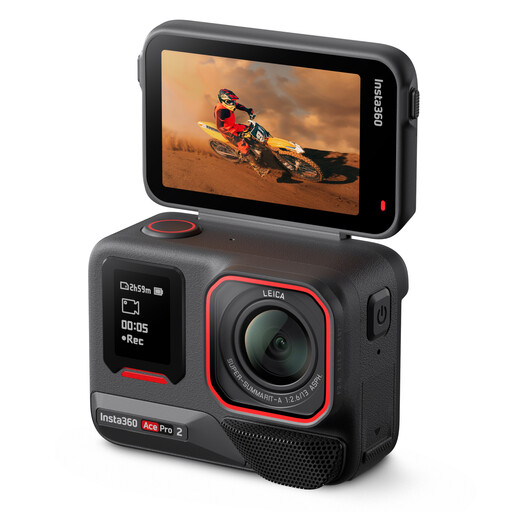
Why we recommend this product: The Insta360 Ace Pro 2 combines a large 1/1.3-inch sensor with a SUMMARIT lens co-engineered with Leica. This hardware foundation enables video recording in 8K at 30 fps and 4K HDR at 60 fps. Image data is processed by a dual AI chip, which is responsible for both image optimisation and noise reduction in PureVideo mode. The camera is waterproof to 12 metres without an additional housing and is cold-resistant down to -20°C.
Pros:
- Image Quality: 8K resolution and a 1/1.3-inch sensor for a high degree of detail and dynamic range.
- Optics: Leica SUMMARIT lens for superior optical performance.
- Low-Light Performance: PureVideo mode with AI noise reduction for clear shots in low light.
- Audio: Hardware-based wind noise reduction for clean sound.
- Usability: Large, 2.5-inch flip-up touchscreen and AI-powered editing features.
- Durability: Waterproof to 12 metres and cold-resistant.
Who it's for: This model is aimed at professional content creators, videographers, and tech-savvy athletes who demand the highest standards of image and sound quality and want to benefit from advanced AI features. It is suitable for demanding scenarios, from diving and motorcycle vlogs to winter sports footage.
Complementary Gear for Your Adventures
A high-quality action camera is the foundation, but for long shooting days or expeditions, additional equipment is often useful.
Emsa N21510 Lightweight Travel Mug
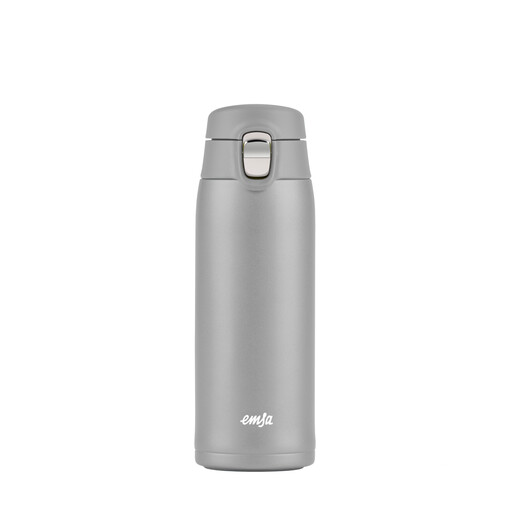
During long outdoor shoots, whether in cold temperatures or on hot days, staying hydrated is important. According to the manufacturer, this stainless steel insulated mug keeps drinks hot for up to 8 hours or cold for 16 hours. Its leak-proof flip-top lid and lightweight design make it a practical companion.
WOLTU Ultra-Light Folding Camping and Fishing Recliner
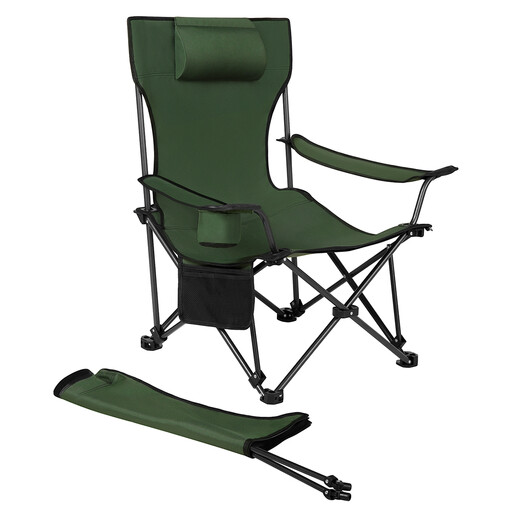
For static shots like time-lapses or during long breaks on a tour, a lightweight folding chair provides comfort. This model weighs only 4 kg and folds down compactly. With a maximum load capacity of 150 kg, an adjustable backrest, and a detachable footrest, it offers a flexible seating or reclining option.
Alternative Equipment Options
Image quality depends not only on the camera but also on the lighting. In situations where ambient light is insufficient or targeted illumination is needed for vlogs or product shots, a portable light source can be crucial. A flexible option for this can be found in models from the folding lamp category.
Frequently Asked Questions (FAQ)
1. What distinguishes an 8K action camera from a 4K camera? The main difference is the resolution. 8K (7680 x 4320 pixels) offers four times the number of pixels as 4K (3840 x 2160 pixels). This results in visibly higher detail and image sharpness. In post-processing, 8K footage allows for more flexibility, as you can zoom in and reframe the shot without dropping below 4K quality.
2. How important is sensor size for a low-light action cam? Sensor size is a critical factor for low-light performance. A larger sensor has larger pixels that can capture more photons (light). This leads to a better signal-to-noise ratio, which manifests as cleaner, more detailed images with less visible image noise. For a good low-light action cam, a sensor of 1 inch or larger is advantageous.
3. Does a waterproof camera always need an additional housing? Not necessarily. Many modern action cameras, like the Insta360 Ace Pro 2, are inherently waterproof to a certain depth (e.g., 10 or 12 metres) right out of the box. This is sufficient for most surface-level water activities like snorkelling, surfing, or shooting in the rain. However, for deeper dives, a special dive housing is still required to protect the camera from the higher water pressure.