
Buyers Guide to Acoustic Wood Panels
Finding the right balance between aesthetics and acoustics is a common challenge in interior design. An echoey home office, muffled TV audio in the living room, or simply a bare wall can significantly detract from your quality of life. Acoustic wood panels offer a solution that merges functionality with modern design. However, the market is crowded, and not every product delivers on its promises. This guide will show you how to avoid common purchasing pitfalls and make an informed decision.
The 2 Most Common Pitfalls When Buying Acoustic Panels
Before you invest, it's important to understand the most common issues that lead to disappointment. Many products focus solely on appearance while neglecting their core function.
- The 'Decor-Only' Pitfall: Numerous panels on the market are made of nothing more than thin plastic or printed foam. They mimic a wood look but offer virtually no sound-absorbing properties. You end up with a purely decorative wood wall covering that fails to solve the core problem: reverberation.
- The Misleading Materials Pitfall: The effectiveness of an acoustic panel depends directly on its construction. Budget products often use low-quality core boards that can warp with humidity changes, or a paper-thin felt that barely absorbs sound waves. A simple foil wrap instead of a real wood veneer also significantly reduces the product's value and durability.
What Really Matters: The Key Quality Indicators
To make an educated choice, you should examine three core parameters. These determine the acoustic performance and visual quality of your new wall feature.
1. Material Construction: Core, Veneer, and Felt
A high-quality acoustic panel consists of three layers whose interplay is crucial:
- Core Material: The slats are typically made from a sturdy MDF (Medium-Density Fibreboard) panel. This material is dimensionally stable and provides a solid base for the surface.
- Surface: This is where the biggest visual difference lies. A real wood veneer, as used in high-end walnut acoustic panels, offers an authentic, natural grain and feel. Cheaper alternatives often use just a printed foil, which looks less premium. The arrangement as a slatted wood wall also creates an appealing sense of depth.
- Acoustic Felt: The backing is the functional heart of the panel. A thick, high-density felt (a material thickness of 9 mm is a good benchmark) is essential for effectively absorbing sound waves and reducing reverberation in the room. Thin or low-grade felt has almost no effect.
2. Sound Absorption vs. Soundproofing
These two terms are often confused, but they describe different physical principles:
- Sound Absorption: This is the primary function of sound-absorbing wall panels. They reduce reverberation within a room by converting sound energy into heat. The result is clearer acoustics, better speech intelligibility, and a calmer atmosphere. This is ideal for living rooms, offices, or recording studios.
- Wall Soundproofing: This is about blocking the transmission of sound between two rooms (e.g., noise from a neighbouring apartment). Acoustic panels have a very minimal effect here. True soundproofing requires structural modifications to the wall itself.
3. Design and Installation Flexibility
Modern panels are often designed as 3D wall panels, with a slatted structure that creates a dynamic play of light and shadow. Pay attention to the installation options as well. Most systems are designed for DIY installation and can either be glued directly to the wall or screwed onto a substructure of wooden battens. The latter method allows for easy removal and can even slightly enhance the acoustic effect due to the additional air gap.
Our Selection for Different User Profiles
Instead of presenting a confusing list, we have selected one product that is suitable for various use cases and matched it to the appropriate user profiles.
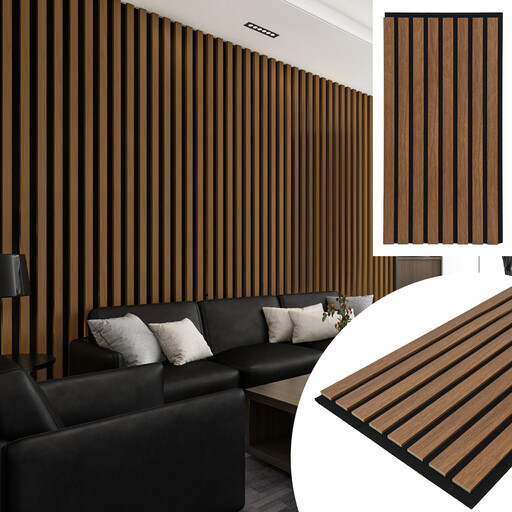
Acoustic Panels Walnut 3D Wall | Soundproofing & Sound Absorption
Why This Fits Their Persona: Ideal for improving office acoustics, as it reduces reverberation during video conferences and creates a quiet, concentration-friendly work environment. The elegant walnut finish also provides a professional backdrop.
This panel bypasses the decor-only pitfall with a wood fibreboard core and a high-density felt backing that demonstrably absorbs sound, rather than just being visually appealing.
Combines a real walnut wood veneer for a high-end aesthetic with effective reduction of room echo. Installation is straightforward thanks to the included accessories.
Acoustic Panels Walnut 3D Wall | Soundproofing & Sound Absorption
Why This Fits Their Persona: Perfect for creating a modern and warm accent wall in the living room or bedroom. It not only enhances the room's aesthetics but also improves the sound quality from the TV and music system.
The real wood veneer provides an authentic, high-quality surface that stands out clearly from cheap plastic imitations, thus avoiding the misleading materials pitfall.
The 3D slatted structure creates an impressive visual depth. The simple installation allows for a quick and effective room upgrade without major effort.
Looking for more options?
Explore our carefully curated selection of products that meet modern design standards and quality criteria.
Frequently Asked Questions (FAQ)
Do acoustic panels improve soundproofing from the neighbouring apartment?
Acoustic panels are primarily designed for sound absorption, meaning they improve the acoustics within a room. They reduce reverberation and echoes. Their effect on soundproofing—blocking noise from outside or adjacent rooms—is minimal. Effective soundproofing requires structural changes to the wall itself.
How many acoustic panels do I need for my room?
There's no one-size-fits-all answer, but a good rule of thumb is to start with the wall opposite the main sound source (e.g., speakers, television). Often, covering just 25–30% of the surface area of one or two walls is enough to achieve a noticeable improvement in room acoustics.
Is installing acoustic panels a DIY-friendly project?
Yes, most modern panels are designed for do-it-yourself (DIY) installation. There are two common methods: gluing them directly to the wall with a suitable mounting adhesive for a permanent solution, or screwing them onto a wooden substructure. The latter method is particularly recommended for uneven walls and makes future removal easier.