
AAA Batteries with USB-C, 1,5 V, 8-pack: What to Look for When Buying
Rechargeable AAA batteries with 1,5 V, USB-C charging and an 8-pack are aimed at households where remote controls, toys, wireless mice and other electronic devices regularly need fresh power. Compared with disposable alkaline batteries, they can reduce ongoing battery consumption. However, AAA rechargeable batteries vary considerably in terms of voltage, charging method and intended use.
If you only look at capacity figures or the word “lithium”, you may end up buying a product that is not suitable for your device. The following points will help you avoid common buying mistakes.
Common Buying Mistakes with AAA Rechargeable Batteries
1. 1,5 V Does Not Mean the Same Thing for Every Rechargeable Battery
Many conventional NiMH rechargeable batteries for AAA devices provide a nominal voltage of 1,2 V. This is suitable for numerous devices, but in electronic applications with a fixed voltage requirement it may lead to earlier switch-off or reduced display performance.
An AAA USB-C rechargeable battery with 1,5 V, on the other hand, usually uses a lithium-ion cell with integrated electronics for voltage regulation. This keeps the output voltage closer to the stated value. Nevertheless, you should check the device’s instruction manual before buying.
2. High mAh Figures Are Not Automatically Comparable
Lithium-ion rechargeable batteries are sometimes labelled with both mAh and mWh. Watt-hours also take voltage into account, making it easier to assess the amount of stored energy.
For example, the VERICO LoopEnergy AAA 900 is specified as 600 mAh or 900 mWh at 1,5 V. A NiMH rechargeable battery with 800 mAh and 1,2 V cannot be directly compared based on the mAh figure alone.
3. USB-C Does Not Always Mean an Individual Charging Port
Some USB-C batteries have an individual charging port on each cell. Other sets use a multi-connector cable that powers several rechargeable batteries at the same time. The VERICO set includes a USB-A-to-4-way-USB-C cable. This allows up to four batteries to be charged in parallel; eight cells require two charging cycles.
The Most Important Technical Criteria
Voltage and Cell Chemistry
For many AAA devices, the size designation AAA, Micro or LR03 is crucial. The voltage must also be suitable:
- 1,5-V lithium-ion rechargeable batteries: a sensible choice when the device requires a stable 1,5-V power supply.
- 1,2-V NiMH rechargeable batteries: suitable for devices explicitly designed to work with rechargeable NiMH cells.
- 1,5-V alkaline batteries: not rechargeable and therefore must not be used with a charger.
An AAA lithium-ion rechargeable battery with USB-C is therefore not automatically the right choice for every device. Particularly with devices that use several batteries, only cells of the same type, age and charge level should be used together.
Charging Time, Power Source and Indicator
Useful details include the charging time and the power source required. According to VERICO’s product information, the LoopEnergy AAA 900 takes around 1 to 2 hours to charge fully when the supplied cable is connected to a USB-A port with at least 2 A. An LED indicator shows the charging status.
Make sure the connectors are clean and dry before charging. Damaged, swollen or unusually hot rechargeable batteries must no longer be used. The charging function does not replace checking the manufacturer’s instructions: use the supplied cable or explicitly compatible charging accessories.
Safety Features and Storage
For a modern AAA rechargeable battery, protection against overcharging, deep discharge, overheating and short circuits is an important feature. According to the VERICO LoopEnergy AAA 900 product description, the relevant protective functions are integrated.
For storage, we recommend using the supplied case or another dry location protected from heat. Rechargeable batteries should not be stored loose with keys, coins or other metal objects. Used batteries should be taken to designated battery collection points and not disposed of with household waste.
Our Selection by User Profile
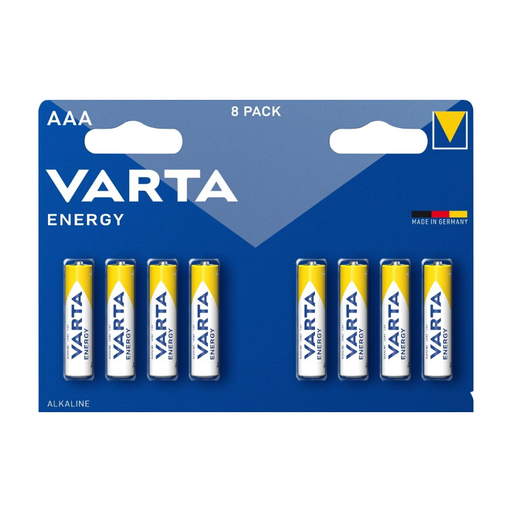
VARTA Alkaline Batteries, Micro, AAA, LR03, 1,5 V Energy, 80-pack
Why this product suits this profile: The bulk pack is ideal for households that need to power many devices and do not require charging equipment. However, these are non-rechargeable batteries.
The clear labelling as alkaline primary batteries prevents confusion with rechargeable batteries. Do not use a charger.
80 AAA cells delivering 1,5 V per battery, providing a practical reserve for remote controls, clocks and radios.
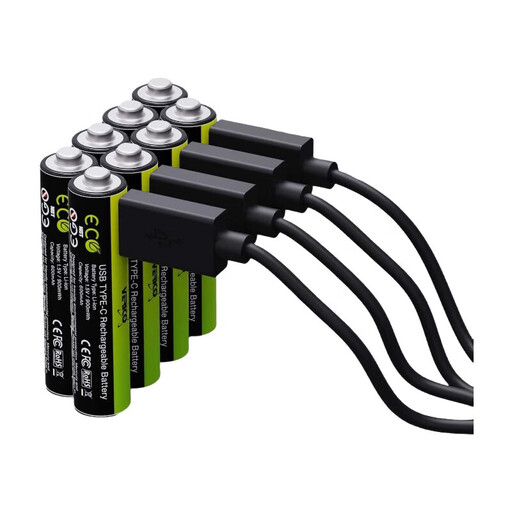
VERICO LoopEnergy AAA 900 Rechargeable USB-C Battery, 8-pack
Why this product suits this profile: This set combines a stated 1,5-V voltage with USB-C charging, making it suitable for regular use in compatible electronic devices.
The specifications state 1,5 V, 600 mAh or 900 mWh, as well as a USB-C port. This makes it possible to check the voltage and charging method before buying.
Eight rechargeable batteries, a charging time of around 1 to 2 hours according to the product information, protection against overcharging and overheating, plus a storage case.
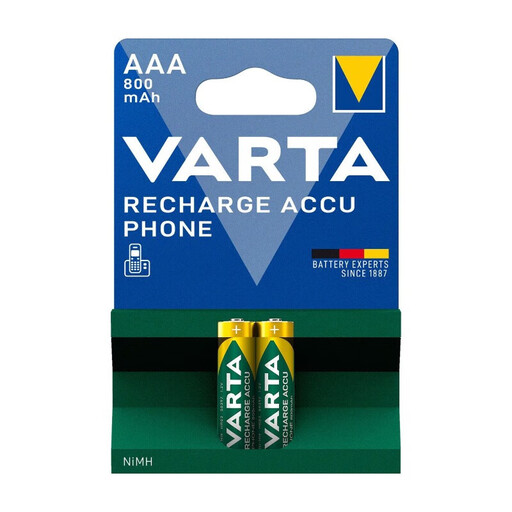
VARTA Recharge Accu Phone AAA 800 mAh, 2-pack
Why this product suits this profile: These NiMH rechargeable batteries are specially designed for cordless phones and are ideal for users who regularly need to replace individual phone batteries.
The labelling as a 1,2-V NiMH rechargeable battery makes it clear that this model is not equivalent to a regulated 1,5-V USB-C rechargeable battery.
800 mAh, NiMH technology and, according to the product information, rechargeable up to 1,000 times; use with a suitable NiMH charger.
Looking for more options?
We have put together a complete, regularly updated list of products that fully meet these strict selection criteria and the safety regulations applicable in the EU.
FAQ About Rechargeable AAA Batteries
Are USB-C AAA Rechargeable Batteries Suitable for Remote Controls?
That depends on the remote control and its voltage requirements. For devices that use 1,5-V AAA cells, a regulated AAA USB-C rechargeable battery may be suitable. Check the instruction manual before inserting the batteries. Never use different battery types, or new and used cells, together.
How Long Do AAA Rechargeable Batteries Last?
The runtime per charge depends on the device’s power requirements, the capacity and the battery’s electronics. A rechargeable battery with 900 mWh does not automatically store more energy than every model with a higher mAh rating, because the voltage also has to be taken into account. Battery life is also affected by charging cycles, storage conditions, heat and deep discharge.
Are 1,5-V AAA Rechargeable Batteries Cheaper Than Disposable Batteries?
For frequent use, an 8-pack of rechargeable batteries can prove cost-effective because fewer disposable cells need to be bought. However, there is the initial cost of the rechargeable batteries and, where applicable, charging accessories. The key factor is how regularly the AAA rechargeable batteries are used in remote controls, toys or other devices.