
60 cm Vanity Unit Buying Guide: How to Avoid Common Mistakes
A 60 cm wide vanity unit is a practical solution for concealing unsightly pipes and creating valuable bathroom storage. However, the selection process can be tricky. The wrong measurements or an unsuitable material can quickly lead to frustration and a cluttered bathroom. This guide will help you navigate the most common pitfalls and make an informed decision.
The 3 Most Common Mistakes When Buying an Under-Sink Cabinet
Many buyers focus solely on aesthetics and price, but the real problems lie in the details. Pay attention to these three points to avoid making a bad purchase:
- The P-trap cutout doesn't fit: This is arguably the most frequent issue. The cabinet has the right width, but the cutout for the drain pipe (p-trap) is too small, too large, or in the wrong place. The result is a cabinet that doesn't sit flush against the wall or requires complex modifications.
- The material swells up: Bathrooms are high-humidity environments. Inexpensive particleboard without a durable sealant will quickly absorb moisture, swell, and lose its structural integrity. The edges and areas around the p-trap cutout are particularly vulnerable.
- Unstable construction: A wobbly frame or sagging shelves are not just an annoyance but also a safety hazard. Low load capacity renders the extra storage useless if heavy cleaning bottles cannot be stored safely.
What Really Matters: The Decisive Parameters
To prevent these problems, you should check three core aspects before buying. These define the longevity and functionality of your new under-sink cabinet.
H2: 1. Material and Surface Finish
The material is crucial for the cabinet's lifespan in a damp bathroom climate.
- MDF (Medium-Density Fibreboard): This is a common and solid choice. The key here is the surface treatment. A high-quality lacquer or a melamine resin coating seals the board, making it water-resistant and easy to clean. A simple white vanity unit with such a coating is often a durable and stylistically versatile option.
- Bamboo: As a material, bamboo is naturally more moisture-resistant and brings a warm, natural look to the bathroom.
- Particleboard: Models made from simple particleboard are often more affordable but should only be considered if they have a complete and robust coating. Pay special attention to the edge sealing.
H2: 2. The Exact Dimensions: More Than Just Width
A 60 cm wide vanity unit is a standard size, but a perfect fit depends on other measurements:
- Overall Dimensions (Width x Depth x Height): Accurately measure the available space under your sink. Be mindful of water connections or other obstacles on the wall.
- P-trap Cutout Dimensions: This is the most critical point. Measure not only the diameter of your p-trap pipe but also the distance from the wall to the front edge of the pipe. Compare these measurements precisely with the manufacturer's specifications for the bathroom cabinet with p-trap cutout.
H2: 3. Storage Concept and Stability
Consider what you want to store. The internal layout determines its everyday usability.
- Doors: They create a tidy, clutter-free look by hiding everything behind them. Models with two doors are the classic choice.
- Drawers: Ideal for organising small items like cosmetics or shaving accessories. Everything is quickly accessible without having to bend down and rummage through the cabinet.
- Open Shelves: Practical for towels or items used daily.
- Stability: A freestanding vanity unit should stand on sturdy feet that slightly elevate it off the floor. This protects the material from direct contact with water on the floor and makes cleaning easier.
Top Picks for Every Need
Here are some recommendations tailored to different needs and living situations.
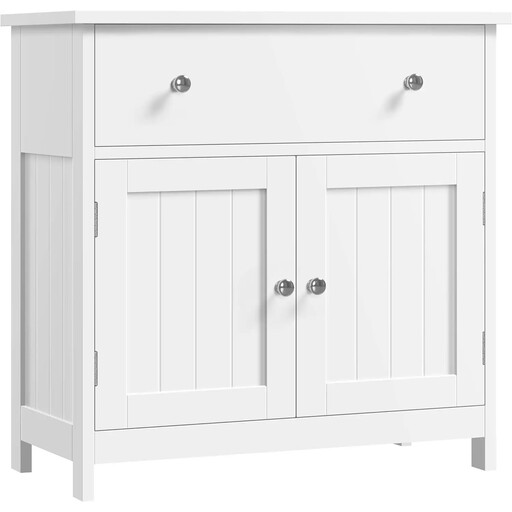
Yaheetech Country Style Vanity Unit
Why it's a great fit: A functional and straightforward solution for a first apartment, guest bathroom, or anyone looking for a solid, basic model. The classic design blends unobtrusively into many bathroom styles.
According to the manufacturer, the model is made from FSC-certified MDF boards with a water-repellent coating. This offers greater resistance to swelling than unsealed particleboard.
The combination of a drawer for small items and a two-door cabinet for larger objects provides a flexible storage layout.
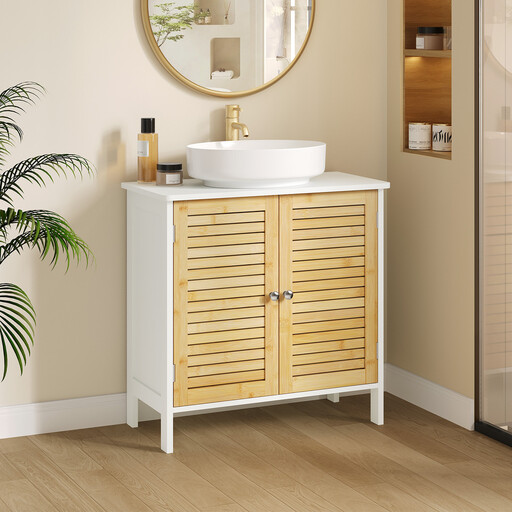
EUGAD Bathroom Vanity, Bamboo & MDF
Why it's a great fit: For anyone who wants to create a modern yet warm atmosphere in their bathroom. The combination of a white body and bamboo elements adds a stylish, natural accent.
The manufacturer clearly states the dimensions for the p-trap cutout (10 x 22.5 cm), allowing for verification before purchase. The material combination of bamboo and E1-grade MDF is well-suited for damp environments.
The interior shelf is removable and adjustable. This creates flexibility for storing bottles and containers of different heights.
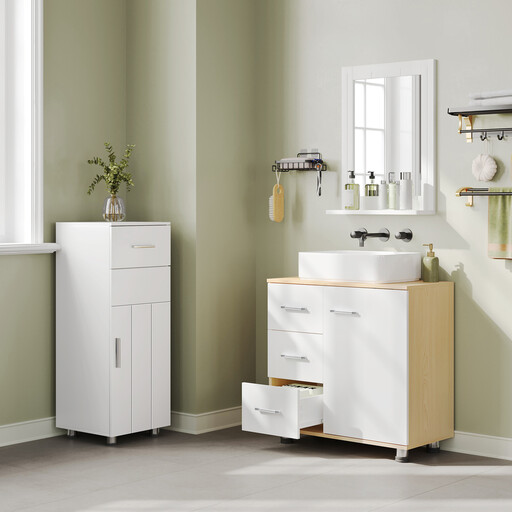
EUGAD Vanity Unit with 3 Drawers
Why it's a great fit: Perfect for families or anyone with a lot of small bathroom items. The three drawers allow for clear separation and organisation, so everything has its place and can be found quickly.
This model offers a structured alternative to simple cabinets where clutter can quickly accumulate. The metal feet ensure a stable construction and protect the body from floor moisture.
The layout of three drawers and a cabinet compartment with an adjustable shelf offers maximum flexibility for organising both large and small items.
Looking for More Options?
We have compiled a complete, up-to-date list of products that fully meet these strict selection criteria and UK safety regulations.
Frequently Asked Questions (FAQ)
1. How do I measure the p-trap cutout correctly? Measure two things: the diameter of the drain pipe and the distance from the wall to the front edge of the pipe. Most manufacturers provide the dimensions of the cutout (width x depth). Ensure your measurements fall within these specifications, with a little extra room for clearance.
2. Can I use an under-sink cabinet with a pedestal sink? No, the cabinets discussed here are specifically designed for wall-mounted sinks. They have a cutout for the p-trap. A pedestal sink has a column that extends to the floor, leaving no room for such a cabinet. For this type of sink, you will need separate bathroom cabinets or shelves.
3. Which material is the most durable for a bathroom? For the best price-to-performance ratio, MDF boards with a high-quality, water-resistant lacquer or melamine coating are a very reliable choice. They resist moisture well and are easy to clean. Materials like solid wood or bamboo are naturally more robust and durable but are in a different price category. Uncoated particleboard should be avoided in the bathroom.