
4K Gaming TV: 2026 Buyer's Guide and Recommendations
Selecting a TV for gaming and home cinema requires an analysis of technical specifications. Modern game consoles like the PlayStation 5 and Xbox Series X, along with high-performance gaming PCs, place significant demands on display technology. Parameters such as refresh rate, panel type, connectivity, and supported HDR formats are crucial for a responsive and visually stunning experience. This guide analyses the relevant criteria and presents a selection of recommended models for 2026.
Buyer's Guide: What to Look For in a 4K Gaming TV
The decision for a specific model should be based on an evaluation of objective performance metrics. The following technical aspects are central to performance.
Refresh Rate (Hz) and Variable Refresh Rate
A high refresh rate is fundamental for smooth motion rendering. While 60 Hz was the long-standing standard, modern gaming requires 120 Hz or more. A 144Hz TV can display up to 144 frames per second, making motion appear sharper and controls feel more immediate.
Closely related is Variable Refresh Rate (VRR) technology. It synchronises the TV's image output with the frame rate of the console or PC. This prevents visual artifacts like screen tearing. Common standards include AMD FreeSync and NVIDIA G-Sync. A VRR TV is a fundamental requirement for a seamless, artifact-free gaming experience.
Panel Technology: OLED vs. QNED/Mini-LED
The panel technology is a key determinant of contrast, brightness, and colour reproduction.
- OLED (Organic Light Emitting Diode): Each pixel is self-illuminating and can be turned off completely and individually. The result is perfect black levels and theoretically infinite contrast. OLED TVs also offer exceptionally wide viewing angles.
- QNED/Mini-LED: This evolution of LCD technology uses a backlight composed of thousands of tiny LEDs. This allows for highly precise brightness control in different areas of the image (Local Dimming). QNED TVs often achieve higher peak brightness than OLEDs, which is advantageous for displaying HDR content in bright rooms.
Connectivity: The Importance of HDMI 2.1
For use with current-generation consoles and graphics cards, an HDMI 2.1 TV is indispensable. Only this standard provides the necessary bandwidth to transmit 4K signals at 120 Hz. Other features of HDMI 2.1 include:
- Auto Low Latency Mode (ALLM): The TV automatically switches to the mode with the lowest input lag upon detecting a game signal.
- Enhanced Audio Return Channel (eARC): Enables the transmission of uncompressed audio formats like Dolby Atmos to a compatible soundbar or AV receiver.
HDR Formats and Audio
High Dynamic Range (HDR) expands the contrast and colour gamut of an image. The most important formats are HDR10, HLG, HDR10+, and Dolby Vision. Dolby Vision and HDR10+ use dynamic metadata to optimise the picture scene-by-scene. A Smart TV with Dolby Vision Atmos offers a combination of advanced picture and sound technology for an immersive home cinema TV experience.
Our Top Picks for 2026
Based on the aforementioned technical criteria, we present three models designed for demanding gaming and home cinema applications.
LG 65” QNED evo 4K Smart TV (65QNED93B6A)
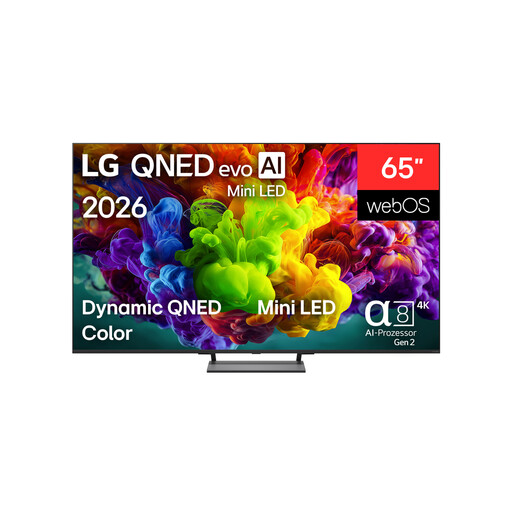
Why We Recommend It: The LG 65QNED93B6A combines the high brightness and colour intensity of QNED technology with a Mini-LED backlight. Its Precision Dimming Pro technology enables fine-grained control over contrast. With a native 120 Hz refresh rate, expandable to 144 Hz, and support for AMD FreeSync and VRR, this model is engineered for fluid gameplay. The α8 Gen2 4K AI Processor optimises picture and sound in real-time.
Pros:
- 4K @ 144Hz for extremely fluid motion
- Mini-LED backlight with Precision Dimming Pro for high contrast
- Support for Dolby Vision and Dolby Atmos
- Comprehensive gaming features: AMD FreeSync, VRR, Game Optimizer
- webOS 25 smart TV system with AI Magic Remote
Who It's For: Users looking for a powerful all-rounder for gaming and home cinema. The high peak brightness of its QNED technology makes it particularly suitable for use in brighter living rooms.
TCL 75T8C 75-inch QLED 4K HDR UHD TV
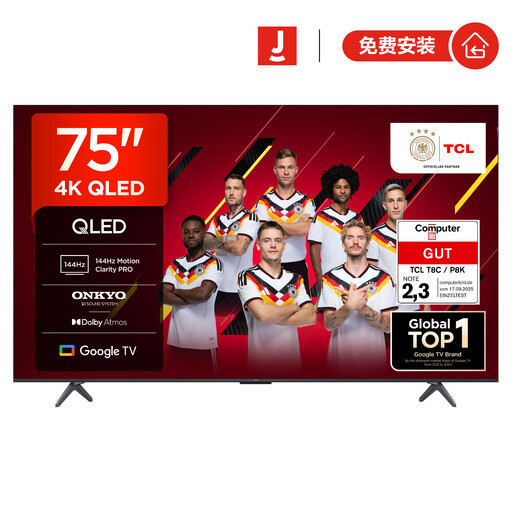
Why We Recommend It: The TCL 75T8C, with its 75-inch QLED display and 144Hz Motion Clarity Pro, delivers large-scale, fluid visuals. According to the manufacturer, the panel covers 97% of the DCI-P3 colour space. Thanks to full HDMI 2.1 support with ALLM, VRR, and FreeSync, it is optimised for next-gen consoles and PC gaming. The integrated Google TV operating system and Onkyo 2.1 sound system with a subwoofer complete the package.
Pros:
- Large 75-inch display with 144Hz VRR
- QLED technology for vibrant colours
- Full gaming suite with HDMI 2.1 and Game Master
- Integrated Onkyo 2.1 sound system
- Google TV smart platform with Chromecast built-in
Who It's For: Users who prefer a large-format display for immersive gaming and cinematic experiences, and who value a powerful, integrated sound system.
LG 77” OLED evo 4K Smart TV (OLED77C67LA)
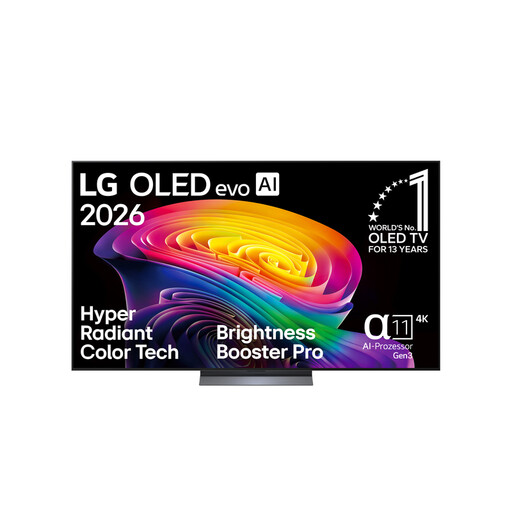
Why We Recommend It: The LG OLED77C67LA represents the pinnacle of picture technology. Its 77-inch OLED panel delivers perfect blacks and infinite contrast, powered by the α11 AI Processor 4K Gen3. For gamers, this model is equipped with VRR support up to 165 Hz, NVIDIA G-Sync compatibility, and AMD FreeSync Premium. The combination of OLED picture quality and advanced gaming features makes it a device for enthusiasts.
Pros:
- OLED panel for perfect blacks and infinite contrast
- Extremely high variable refresh rate up to 165 Hz (VRR)
- Compatible with NVIDIA G-Sync and AMD FreeSync Premium
- Powerful α11 AI Processor 4K Gen 3
- Support for Dolby Vision and Dolby Atmos
Who It's For: Home cinema and gaming enthusiasts who refuse to compromise on picture quality and seek the most responsive performance for competitive gaming on PS5, Xbox, and PC.
Discover More Models
The models featured here cover specific user profiles. If none of these devices perfectly match your needs, you can find a wider selection of TVs with different specifications and screen sizes in our main category.
Frequently Asked Questions (FAQ)
1. What is more important for gaming: 4K resolution or a 120Hz refresh rate? For modern gaming on current-gen consoles, both aspects are important. 4K resolution provides a sharp, detailed image, while 120 Hz enables fluid and responsive motion. A 4K 120Hz TV with HDMI 2.1 is the recommended combination to take full advantage of next-gen hardware capabilities.
2. Do I need a TV with VRR, G-Sync, or FreeSync? Yes, for an optimal gaming experience, these technologies are highly recommended. VRR (Variable Refresh Rate) and its specific implementations, G-Sync (NVIDIA) and FreeSync (AMD), prevent screen tearing by dynamically matching the TV's refresh rate to the output of the graphics card or console. The result is a consistently smooth picture without distracting visual artifacts.
3. Which panel technology is best for a gaming TV? Both OLED and QNED/Mini-LED have specific advantages. OLED offers superior contrast and perfect black levels, which is particularly beneficial in dark game scenes and for home cinema applications. QNED/Mini-LED excels with higher peak brightness, making HDR content look more impressive in bright rooms and eliminating the risk of static image retention (burn-in). The choice depends on personal preference and the room's lighting conditions.