
3D Printer Filament: Recommendations and Buyer's Guide for 2026
Choosing the right 3D printer filament is a critical factor for the quality, functionality, and aesthetics of the final printed object. The material's properties significantly determine its mechanical strength, temperature resistance, and surface finish. An informed decision, therefore, is not based on subjective preferences but on the technical requirements of the specific project. This guide analyses the key criteria for selecting FDM filament and presents a selection of materials for various applications.
Selection Criteria for FDM Filament: What Matters Most
Before you buy 3D printer filament, an analysis of the technical parameters is essential. Compatibility with your printer and the requirements of the printed object are the primary decision drivers.
Material Type: PLA vs. PETG
The two most common materials for FDM printing are PLA and PETG. Their properties differ fundamentally and define their ideal use cases.
- PLA (Polylactic Acid): This biopolymer, derived from renewable resources like corn starch, is particularly popular with beginners due to its ease of use. It does not require a high nozzle temperature and has minimal warping, which reduces the need for a heated print bed. PLA filament is excellent for detailed prototypes, decorative objects, and models where mechanical strength is a secondary concern.
- PETG (Polyethylene Terephthalate Glycol): PETG filament combines greater durability and flexibility with good thermal resistance. It is more resistant to mechanical stress and chemicals than PLA. These properties make it the preferred choice for functional parts, mechanical prototypes, or objects that must withstand a certain level of stress. The printing process requires slightly higher temperatures and more precise calibration to ensure optimal layer adhesion.
Filament Diameter and Tolerance
The standard diameter for most desktop FDM printers is 1.75mm. The dimensional accuracy of the filament, indicated by its tolerance (e.g., ±0.02 mm), is crucial. A tight tolerance ensures a consistent material flow, minimises the risk of nozzle clogging, and contributes to consistent extrusion. Deviations in diameter can lead to visible defects in the print.
Surface Finish and Aesthetics
The surface of the filament influences the appearance of the finished print.
- Matte Filaments: A matte surface reduces light reflections and can effectively conceal fine layer lines. This gives the object a premium, almost organic feel and is often preferred for artistic or architectural models.
- Glossy Filaments: Glossy surfaces create a vibrant and intense colour effect. They are well-suited for objects where a smooth, polished-looking surface is desired.
Our Top Filament Picks for 2026
The following selection is based on the technical specifications and intended applications of the products.
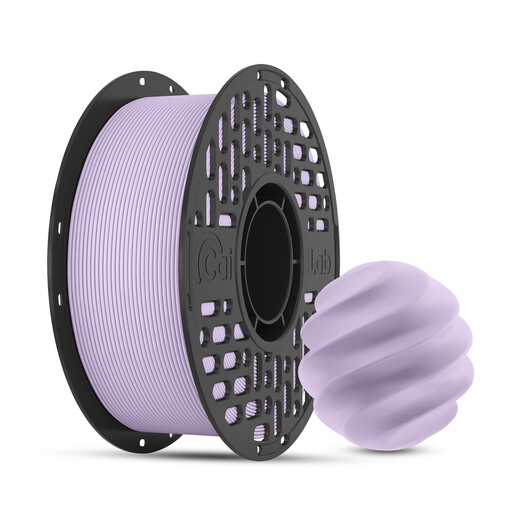
1. CAILAB 3D Printer Filament PLA Matte - Misty Lilac
-
Why We Recommend This Product: This filament is designed for users who place a high value on the aesthetic quality of their prints. The matte surface minimises visible layer lines and creates a professional finish suitable for design objects and visual prototypes. Its formulation is engineered for a smooth printing process with good bed adhesion.
-
Advantages:
- Matte Surface: Provides a soft, non-glossy look and masks printing artifacts.
- Consistent Flow: The composition is optimised to reduce clogging and ensure consistent extrusion.
- Stable Diameter: Strict dimensional accuracy supports a reliable printing process.
- Material Base: Made from PLA based on corn extract.
-
Who It's For: Creative users, designers, and hobbyists who want to create aesthetically demanding models with a high-quality surface appearance.
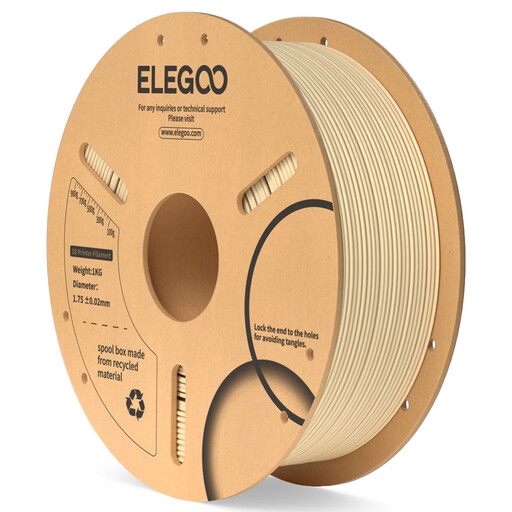
2. Elegoo PLA Filament 1kg Paper Spool - Beige
-
Why We Recommend This Product: Elegoo combines high process reliability with a focus on sustainability in this PLA filament. The precise manufacturing with a ±0.02 mm tolerance and tangle-free winding maximise the print success rate. The cardboard spool is a more eco-conscious alternative to traditional plastic spools.
-
Advantages:
- High Dimensional Accuracy: The ±0.02 mm tolerance ensures very consistent extrusion.
- Tangle-Free Winding: Mechanical winding and manual inspection prevent material jams.
- Cardboard Spool: A more sustainable spool solution with viewing holes to check the remaining filament.
- Low Warping: The material has a low tendency to warp and shrink.
-
Who It's For: Users looking for a reliable standard PLA for a wide range of projects who value high print reliability and more sustainable consumables.
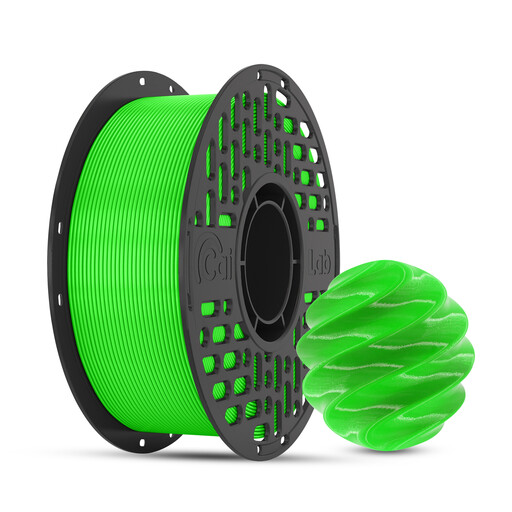
3. CAILAB 3D Printer Filament PETG - Green
-
Why We Recommend This Product: This PETG filament is designed for producing functional and durable parts. It combines the mechanical strength and heat resistance of materials like ABS with the easier printability of PLA. Its chemical resistance to oils and common cleaning agents expands its range of applications to parts subject to everyday stress.
-
Advantages:
- Hybrid Performance: High impact resistance and flexibility for functional applications.
- Chemical Resistance: Resistant to oils and many household cleaners.
- Low Shrinkage: Minimized warping and shrinkage reduce the failure rate for large objects.
- Glossy Finish: Creates a smooth, polished-looking surface.
-
Who It's For: Advanced users, engineers, and prototyping specialists who print functional parts, enclosures, or mechanical components with enhanced durability and resistance.
Discover More Materials and Options
The world of 3D printer accessories is diverse. Besides PLA and PETG, there are numerous specialty filaments such as ABS, TPU, or ASA, each optimised for specific niche applications. Every material has its own requirements for the printer and the printing process.
For a more comprehensive overview of available filaments and their properties, visit our materials category.
Frequently Asked Questions (FAQ)
1. What is the difference between PLA and PETG filament? PLA is an easy-to-print material for detailed but mechanically less demanding objects. PETG offers greater strength, flexibility, and temperature resistance, making it ideal for functional parts. However, printing with PETG requires more precise settings and higher temperatures.
2. How do I store 3D printer filament correctly? Most filaments, especially PLA and PETG, are hygroscopic, meaning they absorb moisture from the air. Damp filament leads to poor print quality (e.g., bubbling, brittle prints). Therefore, store open spools in an airtight container or bag, ideally with a desiccant (silica gel).
3. What is the most common diameter for 3D printer filament? The most common diameter for desktop 3D printers is 1.75 mm. Some older or specialized models also use 2.85 mm diameter filament. Check your printer's specifications before purchasing to ensure compatibility.