
3-tonne car jacks: how to choose one for cars, SUVs and vans
A 3-tonne car jack is generally suitable for many cars, SUVs, MPVs and light vans. However, load capacity alone doesn’t determine whether a model is right for your vehicle. The lifting range, lifting point, minimum height and intended use are just as important.
If you focus only on the weight rating or a low price, you could end up with a jack that won’t fit beneath your vehicle, won’t lift it high enough or is difficult to position in your garage. The following points will help you avoid common buying mistakes.
Common car jack buying mistakes
1. Confusing load capacity with overall suitability
The “3 tonnes” rating refers to the stated maximum load capacity. It doesn’t automatically mean that every vehicle with a gross vehicle weight of up to 3,000 kg can be lifted at any jacking point. You also need to consider the axle load, the lifting point specified by the vehicle manufacturer and the car jack’s user manual.
A car jack for an SUV or a car jack for a van should therefore have not only a suitable rated load, but also enough lifting height and a stable lifting pad.
2. Not considering minimum height and maximum lifting height together
A vehicle with low ground clearance needs a low-profile car jack. A traditional trolley jack may be too tall for a sports car, while a compact scissor jack may not offer enough lift for an SUV.
Before buying, check:
- the jack’s minimum height and the available ground clearance;
- the maximum lifting height and the distance to the designated lifting point;
- the shape and size of the saddle;
- the space needed for the pump handle, crank or power cable.
3. A car jack is no substitute for axle stands
A hydraulic car jack is designed to lift a vehicle, not to support it for extended periods. If you’re working beneath a vehicle, you’ll need suitable 3-tonne axle stands. The vehicle must be on a level, load-bearing surface. Apply the handbrake and use wheel chocks as directed in the vehicle manual.
The key technical specifications
Choose a load capacity to suit your vehicle
A hydraulic car jack with a 3-tonne rated load is suitable for many home uses, including changing tyres and carrying out maintenance on a range of cars and SUVs. Never exceed the rated load. For heavy vans or commercial vehicles, a 10-tonne hydraulic bottle jack may be more suitable, provided its design and lifting point are appropriate.
A bottle jack’s vertical design saves space, but the vehicle needs enough clearance beneath the lifting point. For a workshop where the jack will be used frequently, a pneumatic car jack or a fixed trolley jack may also be worth considering, depending on the work involved.
Compare the lifting range and saddle
A 3-tonne trolley jack should have a lifting range that suits your vehicle. A large saddle can distribute the load more effectively, but it must not touch pipes, sills or plastic parts. A rubber pad can improve contact with the designated lifting point, provided it’s suitable for the model.
Changing a tyre requires less lift than working on the suspension. So, don’t just check the maximum height: make sure the wheel will actually clear the ground when the vehicle is raised.
Understand the materials, standards and markings
Steel designs are generally heavier, which can make them feel particularly stable. Aluminium-steel combinations, by contrast, reduce the weight you need to carry. Actual suitability depends on the design, build quality and permitted load.
Some products list EN 1494, GS or CE markings. According to the relevant product information, the TCE axle stand set carries EN 1494 and GS markings, while several TCE car jacks are stated to have CE certification. A CE marking is not a general quality seal, and it doesn’t replace checking your vehicle’s specifications, the user manual and the product’s intended use.
Our picks for different users
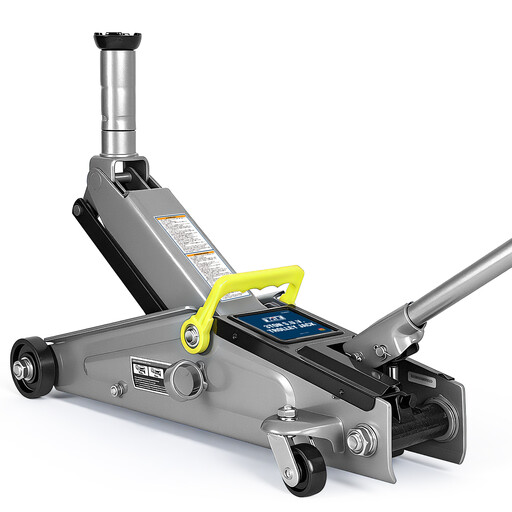
TCE 3 Ton Horizontal Hydraulic Car Jack
Why this product suits this user: According to the product information, this hydraulic car jack has a 3-tonne load capacity and a lifting range of 150 to 530 mm. It’s designed for many cars, SUVs and MPVs.
The clearly stated lifting range makes it easier to check the jack against your vehicle’s ground clearance and the height you need.
Steel construction and a safety valve; stated to be CE-certified according to the product information. Suitable for changing tyres on several types of vehicle.
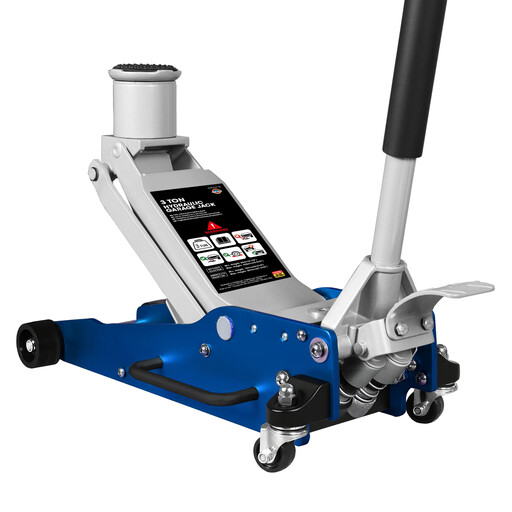
TCE 3 Ton Aluminum Alloy Horizontal Hydraulic Car Jack
Why this product suits this user: Its stated entry height of 85 mm makes it suitable for vehicles with low ground clearance. The extra height extension increases the stated maximum height to 541 mm.
The low profile reduces the risk of the jack failing to fit beneath the jacking point of a sports car or a lowered vehicle.
Aluminium alloy, a dual-pump system and, according to the product information, EN 1494 and CE markings.
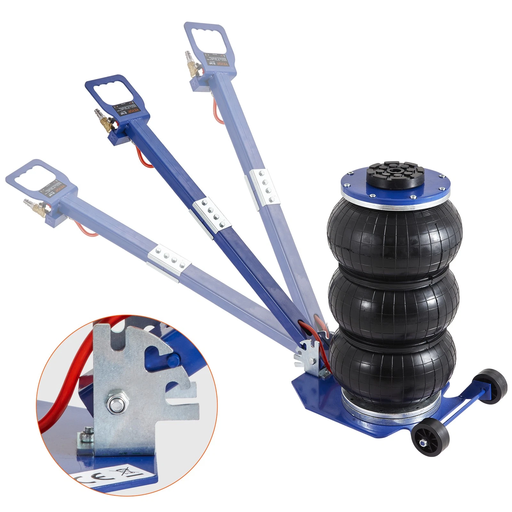
VEVOR Pneumatic Car Jack 3T Air Jack
Why this product suits this user: According to the product information, this pneumatic car jack is designed for SUVs, pick-up trucks and vehicles with a 3-tonne load capacity. It requires a suitable compressor.
The need for a compressed air supply is made clear, helping you avoid buying the jack without a suitable compressor.
Stated lifting range of 140 to 450 mm; designed for repeated lifting with a compressed air connection.
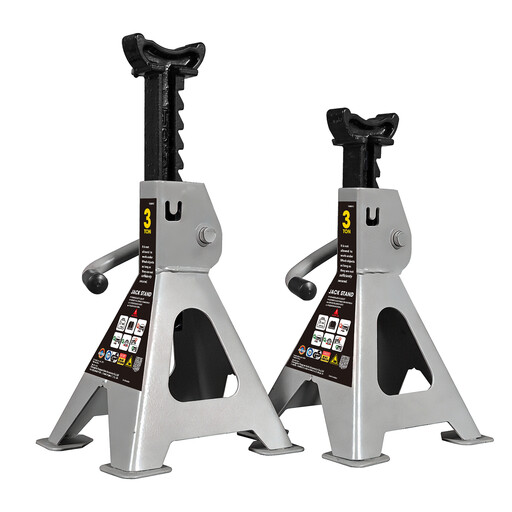
TCE 3 Ton Heavy Duty Car Jack Stands
Why this product suits this user: This set is for anyone looking to use axle stands alongside a car jack when changing a tyre or carrying out repairs.
The stands are designed to provide separate support, so the hydraulic jack doesn’t have to hold the load on its own.
Adjustable from 276 to 420 mm; stated to be EN 1494 compliant and GS-certified according to the product information.
Looking for more options?
We’ve put together a complete, regularly updated list of products that meet these strict selection criteria and the safety regulations in force in the EU.
Practical tips for buying and using a car jack
- Compare the minimum height with the lowest jacking point on your vehicle.
- Check the permitted gross vehicle weight, axle load and the vehicle manufacturer’s recommendations.
- Only use the jack on a level, load-bearing surface.
- Use suitable 3-tonne axle stands when working beneath a vehicle.
- Regularly check the hydraulics, wheels, locking mechanism and saddle.
- Store the jack in a dry place with no load on it, unless the user manual says otherwise.
Frequently asked questions about 3-tonne car jacks
Is a 3-tonne car jack suitable for an SUV?
It depends on the vehicle’s weight, axle load, jacking point and required lifting height. The 3-tonne rating must be within the permitted load limits. The jack must also reach the designated lifting point and raise the wheel high enough.
Which is better for changing a tyre: a trolley jack or an electric scissor jack?
A trolley jack is usually easy to position in a garage and requires fewer repeated pumping movements. An electric scissor jack may be a good option for emergencies or mobile use, provided the power supply, lifting height and vehicle compatibility are right. An electric function is no substitute for proper support.
How long does a hydraulic car jack last?
There’s no reliable way to give a set lifespan. It depends on the load, storage, maintenance and whether you follow the user manual. Overloading, uneven ground and damaged hydraulics can shorten its service life. If you notice an oil leak, deformation or unsafe lowering, stop using the jack.