
Buy a 12V LiFePO4 Battery: How to Choose the Right Capacity, BMS and Charger
A 12V LiFePO4 battery can be used in a motorhome, on a boat, in a solar power system or as an off-grid battery. However, your choice should not be based solely on the stated amp-hour rating. Energy requirements, maximum discharge current, the integrated BMS and charger compatibility are equally important.
Budget-friendly offers can often lead to common buying mistakes:
- Capacity is confused with usable energy: A 12V 100Ah battery corresponds to around 1,280 Wh of nominal energy. Inverter losses, cut-off limits and safety reserves reduce the energy available in practice.
- The BMS is judged only by its amp rating: A high maximum current does not automatically mean that the battery, cables, fuses and inverter are compatible with one another.
- The existing charger is unsuitable: A 12V battery charger designed for lead-acid batteries will not necessarily work with a lithium iron phosphate battery. You need a charger with an explicitly approved LiFePO4 charging mode.
- Temperature specifications are overlooked: Charging can be problematic at low temperatures. A BMS with low-temperature protection can interrupt the charging process in critical conditions, provided this function is actually integrated.
The Most Important Parameters of a 12V LiFePO4 Battery
1. Calculate Capacity and Energy Requirements
Nominal energy can be roughly calculated using the following formula:
Voltage × capacity = nominal energy
Examples:
- 12V 100Ah LiFePO4 battery: approximately 1,280 Wh
- 12V 200Ah LiFePO4 battery: approximately 2,560 Wh
- 12V 300Ah LiFePO4 battery: approximately 3,840 Wh
- 12V 320Ah LiFePO4 battery: approximately 4,096 Wh according to the product details
- 12V 640Ah LiFePO4 battery: approximately 8,192 Wh according to the product details
To make the right choice, add together the consumption of all your devices. A compressor cool box, lighting, router, laptop and inverter require less capacity than a system running a coffee machine, heater or air conditioner. The desired autonomy is also important: should the solar battery only provide power overnight, or for several days without sufficient sunlight?
2. BMS, Continuous Current and Protection Functions
A battery management system, or BMS for short, monitors cell voltage, current and temperature, among other things. Depending on the model, it may include protection against overcharging, deep discharge, overcurrent, short circuits and overheating.
Look out for:
- continuous discharge current, rather than just short-term peak values
- protection when charging at low temperatures
- cell balancing, if stated by the manufacturer
- permitted series and parallel connections
- fuses and cable cross-sections suitable for the system
A battery with a 100A BMS is not automatically suitable for every 12V system. A 1,200W inverter may already require around 100A or more at 12V, depending on efficiency and load. Larger BMS ratings or several properly matched batteries may therefore be needed for high continuous loads.
3. Charger and System Compatibility
A LiFePO4 battery charger should be approved for the battery chemistry. Check the following before buying:
- Does the device support 12V LiFePO4?
- Is the charging current suitable for the battery capacity and the manufacturer’s specification?
- Is a lithium iron phosphate charging profile available?
- Are the connectors, ring terminals or clamps suitable for installation?
- Is it intended for use with a solar controller, alternator or mains power?
A 5A charger is more suitable for smaller batteries or slow trickle charging. A 10A or 20A charger can charge larger batteries more quickly, but it must match the battery’s permitted charging power.
Our Selection by User Profile
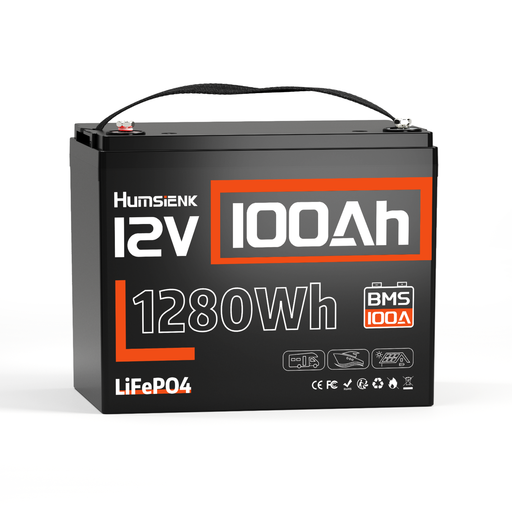
HumsiENK 12V 100Ah LiFePO4 Battery, 1280Wh, 100A BMS
Why this product suits this profile: With its compact Group 24 form factor and 100Ah capacity, this battery is suitable for smaller motorhomes, boats, camping equipment and basic solar systems. According to the product details, no Bluetooth functionality is required for basic operation, so the focus is on capacity and BMS protection.
The stated 100A BMS rating and 1,280Wh nominal energy make it easier to compare this battery with other 12V models. Even so, check the available installation space and inverter output before buying.
100Ah capacity, integrated 100A BMS and support for series and parallel connection according to the product description.
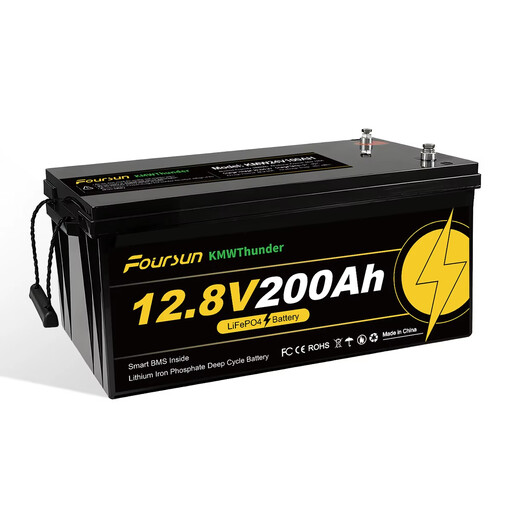
Foursun 12V 200Ah LiFePO4 Battery with Low-Temperature BMS
Why this product suits this profile: According to the product data, the 200Ah version provides 2,560Wh and is designed for motorhome and solar applications where more reserve capacity is needed than with a 100Ah battery.
The stated low-temperature protection addresses an operating condition that is often overlooked. Before installation, check the specific charging and cut-off temperatures in the manual.
200Ah capacity, IP67 rating and, according to the product data, a BMS with a maximum discharge current of 200A.
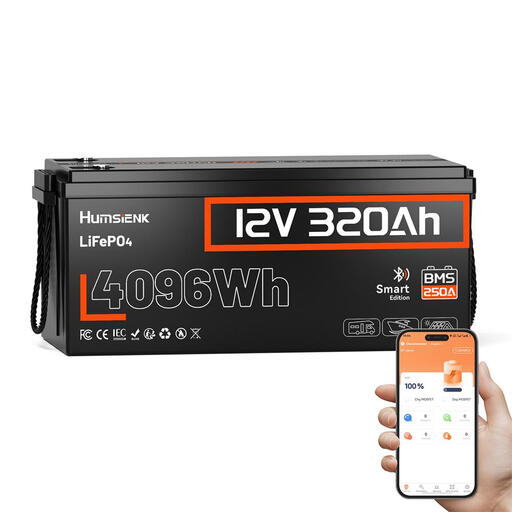
HumsiENK 12V 320Ah LiFePO4 Battery, 4,096Wh, 250A BMS
Why this product suits this profile: Its high capacity is aimed at motorhomes, marine systems and off-grid applications with multiple consumers. According to the product description, Bluetooth 5.0 enables you to view the state of charge, voltage and temperature via an app.
The specific energy rating of 4,096Wh prevents comparisons based solely on the Ah figure. Even so, the installation dimensions, charger and inverter’s permitted continuous load must all be compatible.
250A BMS, Bluetooth monitoring, IP65 rating and support for up to 4S4P according to the product description.
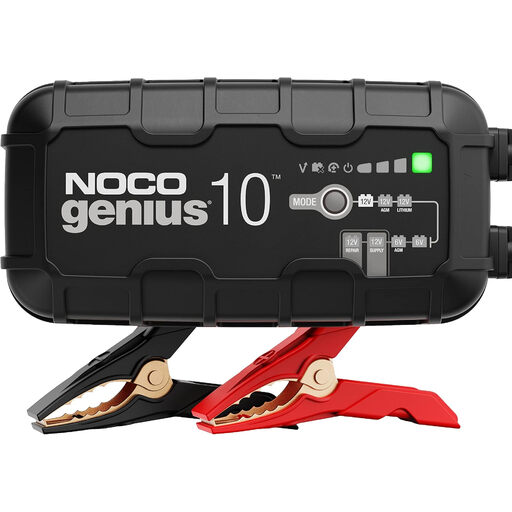
NOCO GENIUS10 10A Battery Charger for 6V and 12V
Why this product suits this profile: According to the product description, this device is designed for 6V and 12V lead-acid batteries as well as lithium LiFePO4 batteries. It is suitable for cars, motorbikes, vans and smaller motorhomes.
The explicitly stated LiFePO4 mode reduces the risk of using an unsuitable charging profile. However, you must still select the correct battery type before connecting the charger.
10A charging current, temperature monitoring and a stated capacity range of up to 230Ah.
Looking for more options?
We have put together a complete, regularly updated list of products that fully meet these strict selection criteria and the safety regulations applicable in the EU.
Frequently Asked Questions About 12V LiFePO4 Batteries
How long does a 12V LiFePO4 battery last?
The potential cycle count depends on cell quality, depth of discharge, charging conditions, temperature and usage. Manufacturer claims such as “4500+ cycles” or “6000 cycles” should therefore always be considered in the context of the stated test conditions. They do not provide a universal service life for every installation. Regular deep discharge, incorrect charging voltage and charging at unsuitable temperatures can shorten the battery’s lifespan.
Which charger do I need for a 12V LiFePO4 battery?
Use a charger with an explicitly selected LiFePO4 charging profile. The charging current must be suitable for the battery’s capacity and approved specifications. A 5A charger is suitable for slow charging or smaller batteries, while 10A or 20A chargers can charge larger capacities more quickly. The specifications from the battery and charger manufacturers should match.
Can I connect several 12V LiFePO4 batteries?
This is only possible if the particular model permits series and parallel connections. Batteries should have the same voltage and capacity, as well as a comparable state of charge. Follow the manufacturer’s instructions before connecting them. In addition, the cables, fuses, charger, solar controller and inverter must all be designed to handle the higher total output.