
12V 100Ah LiFePO4 Battery Buyer’s Guide: Avoid Costly Mistakes
Choosing a 12V 100Ah LiFePO4 battery is often the first step toward greater off-grid freedom in an RV, on a boat, or for a personal solar setup. However, the market is flooded with technical data and marketing promises that obscure more than they clarify. Before you invest, you need to understand the common pitfalls that often lead to disappointment and unnecessary expenses.
Many buyers focus on a single, heavily advertised number—usually the cycle life—while overlooking critical weaknesses. Two of the most common sources of error are:
- Unrealistic Cycle Life Claims: A figure like "6000 cycles" is practically worthless without the context of its Depth of Discharge (DOD). A battery that is only discharged to 50% will naturally last more cycles than one that is regularly discharged to 90%. Reputable manufacturers always specify the cycle count in conjunction with the DOD.
- Inadequate Battery Management System (BMS): The BMS is the brain of the battery. A low-quality BMS without essential safety features, especially low-temperature charging protection, can irreparably damage the expensive lithium cells in freezing conditions or compromise the safety of the entire system.
This guide helps you navigate these and other pitfalls by breaking down the technical parameters that truly matter.
What Really Matters in a 100Ah Leisure Battery
To make an informed decision, you should be guided not by advertising slogans, but by verifiable technical specifications. Three parameters are indispensable for the longevity and safety of your power supply.
1. The Battery Management System (BMS): More Than Just a Buzzword
The BMS is the most important protective device for your lithium iron phosphate battery. It monitors and controls the individual cells to maximize their lifespan and ensure safe operation. A good BMS for a 100Ah leisure battery should offer at least the following protection features:
- Overcharge protection: Prevents cell damage from excessive charging voltage.
- Over-discharge protection: Shuts down the battery before the voltage drops to a critical level.
- Short-circuit protection: Instantly interrupts the circuit in the event of a short circuit.
- Overcurrent protection: Protects against excessive charging and discharging currents.
- Low-temperature charging protection: A critical function for use in colder climates. It prevents the battery from being charged at temperatures below 0°C (32°F), as this would permanently damage the cells. A 100A BMS also indicates that the battery can deliver a continuous discharge current of 100 amps (approx. 1200 watts), which is sufficient for most applications in an RV or on a boat.
2. Cycle Stability and Usable Energy (Deep Cycle)
LiFePO4 batteries are known for their high cycle stability, making them ideal for deep-cycle applications like a 12V solar battery or RV battery. Unlike conventional lead-acid batteries, where it's recommended to use only 50% of the nominal capacity to avoid drastically shortening their lifespan, LiFePO4 batteries can be safely discharged to 80–100%.
This means a 12V 100Ah LiFePO4 battery delivers nearly twice the usable energy of a 100Ah lead-acid battery. When reviewing manufacturer specifications, look for a clear statement on lifespan, such as "4000 cycles at 80% DOD." This is a realistic and comparable value.
3. Form Factor and Compatibility
The physical dimensions are crucial, especially when replacing an old battery in an RV or a marine battery. Many LiFePO4 batteries are offered in standardized case sizes, such as the BCI Group 24. This significantly simplifies installation into existing battery compartments and saves you from complex modifications. Before purchasing, check the dimensions and compare them with the available space.
Recommended Picks for Different Users
Based on these objective criteria, we have identified several models that represent a well-considered choice for different user profiles and their specific requirements.
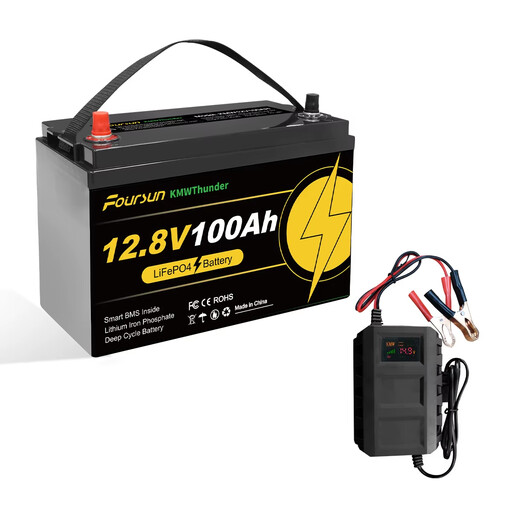
Foursun 12V 100Ah LiFePO4 Battery with Low-Temp BMS Protection,with Charger
Why this model is a good fit: Ideal for users seeking a reliable basic power supply for weekend trips or a small garden shed solar project. It focuses on core functions without inflating the budget with expensive add-ons like Bluetooth.
The model specifies a BMS with low-temperature protection and lists a cycle life of over 4500, providing a transparent basis for the purchase decision and avoiding empty promises.
Offers a solid price-to-performance ratio for a 100Ah battery with all necessary safety features. The stated expandability (up to 4S4P) ensures future upgrade options.
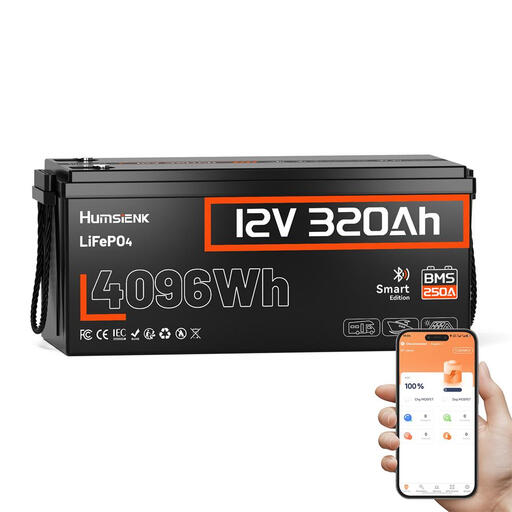
Humsienk 12V 320Ah LiFePO4 Battery with Bluetooth, 4096Wh , 250A BMS
Why this model is a good fit: Designed for users aiming for maximum energy independence. With 4096Wh of energy and a powerful 250A BMS, it can run high-draw appliances like an air conditioner or an induction cooktop for extended periods.
The integrated Bluetooth function allows for real-time monitoring of voltage, current, and temperature via an app. This provides full transparency into the battery's status and exposes inaccurate marketing claims with hard data.
The enormous 320Ah capacity replaces multiple smaller batteries, reducing wiring complexity. The 250A BMS delivers high peak power for demanding devices.
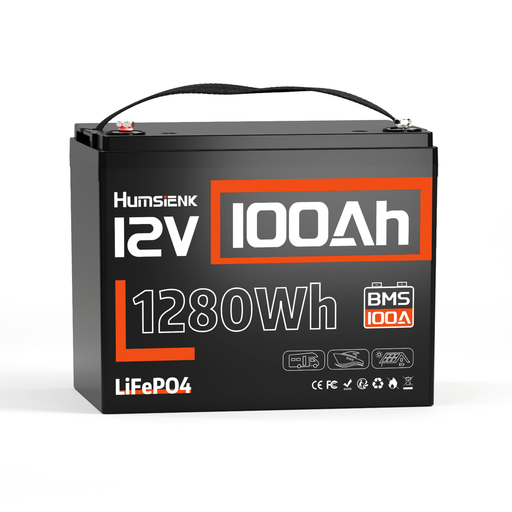
HumsiENK 12V 100Ah LiFePO4 Battery 1280Wh, Group 24, IP67
Why this model is a good fit: Perfect for a direct drop-in replacement of old lead-acid batteries in RVs and boats. Thanks to its standard Group 24 dimensions, it fits into many existing brackets, which greatly simplifies the upgrade and saves costs.
This model solves the common problem of incompatible dimensions, which leads to unexpected installation issues with many budget options. The IP67 certification also provides verifiable protection against water and dust.
The combination of a BCI standard size, low weight (approx. 9 kg / 20 lbs), and high protection rating (IP67) makes it a robust and flexible solution for demanding environments, such as on a boat or in an off-road vehicle.
Looking for More Options?
We have compiled a complete, up-to-date list of products that fully meet these strict selection criteria and safety regulations.
Frequently Asked Questions (FAQ)
Can I charge a LiFePO4 battery with my old lead-acid charger?
It is not recommended. Lead-acid chargers have charging profiles (e.g., with desulfation phases) that are unsuitable or even harmful to LiFePO4 cells. To achieve full capacity and maximize the battery's lifespan, you should use a dedicated LiFePO4 charger that features a CC/CV (Constant Current/Constant Voltage) charging profile.
How many years does a 12V 100Ah LiFePO4 battery really last?
The lifespan depends heavily on usage. With average use involving daily cycles (e.g., in an RV) and discharging to 80% DOD, many manufacturers specify a lifespan of 4,000 to 6,000 cycles. With daily use, this translates to a theoretical lifespan of over 10 years. In comparison, lead-acid batteries often only achieve 300–500 cycles under similar conditions.
What does "100A BMS" mean, and why is it important for my RV battery?
The "100A" rating on a BMS refers to the maximum continuous discharge current the battery can safely deliver. 100 amps at 12 volts corresponds to a power output of about 1200 watts. This is important to ensure the battery can power more demanding appliances like a hairdryer, a coffee machine, or an inverter for 230V devices without the BMS shutting down for safety. For most standard applications in a camper, a 100A BMS is sufficient.